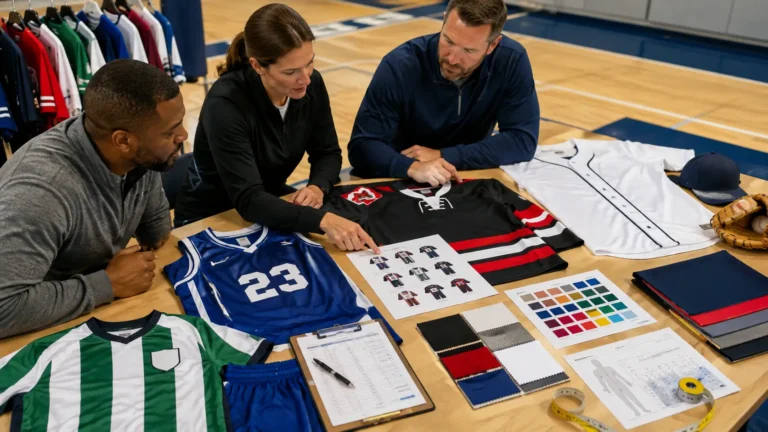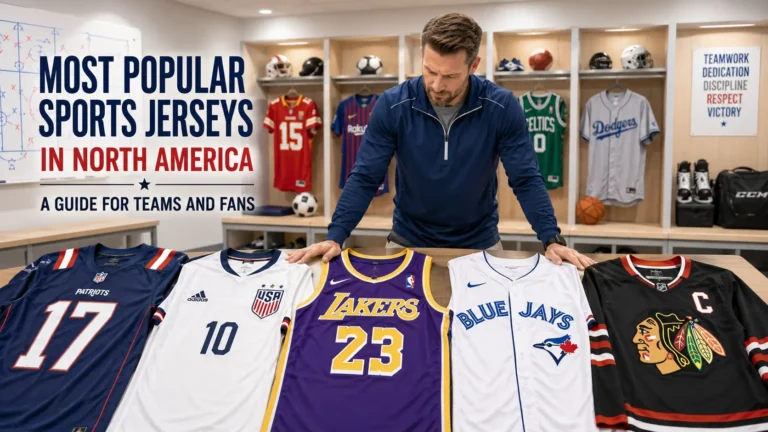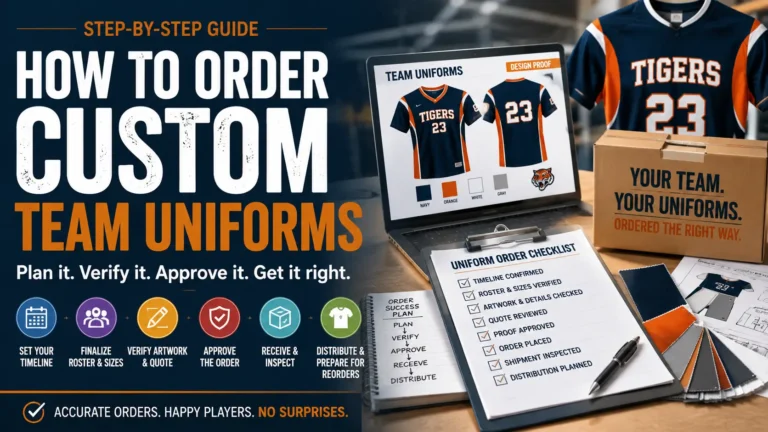
Decide What Your Team Actually Needs
Before Paying for Extra Uniforms
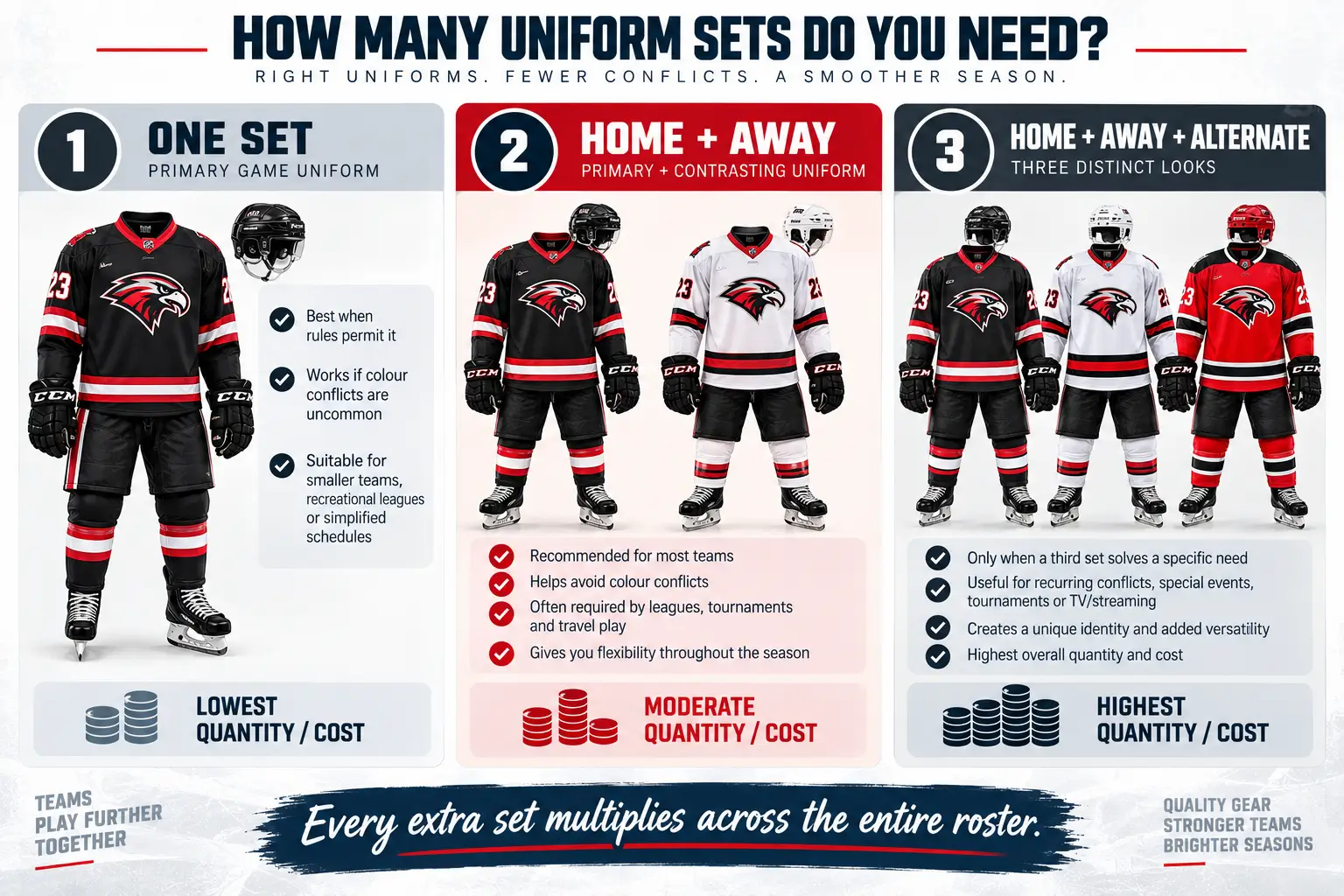
Home and away uniforms are common in organized sports, but that does not mean every team automatically needs two complete sets. Some teams can operate perfectly well with one primary uniform. Others need a second contrasting set because of league rules, color conflicts, tournament schedules, travel demands, or the way their competition is organized. A smaller number can justify an alternate or third look.
The expensive mistake is deciding that the team needs “home and away” simply because that’s what established clubs or professional teams use. Every additional jersey, pair of shorts or pants, set of socks, goalkeeper garment, and spare multiplies across the roster can affect a uniform budget in a big way. What sounds like one extra uniform can become dozens of additional pieces once the complete order is calculated.
The better question is: What situations will the team actually face during the season, and what is the smallest uniform package that handles them reliably?
That is the purpose of this guide. We will look at home, away and alternate team uniforms as a planning decision rather than a fashion decision, so you can determine how many sets your team needs before you start multiplying quantities and requesting supplier quotes.
The Lesson Learned
Do not order a second or third uniform set until you can explain what problem it solves. Start with league and tournament requirements, then consider color conflicts, travel, game frequency, laundry turnaround, goalkeeper needs, spares and the all important budget. If one set handles the season, keep the order simple. If a second set prevents real problems, plan it from the beginning.
On the Agenda
Check the Rules
Confirm what your league, association and tournaments actually require.
02One Set?
Many teams can operate with one main set when color and scheduling issues are limited.
03Home + Away?
A contrasting second set can solve recurring match-day and travel problems.
04Alternate?
A third set should have a clear competitive, operational or branding purpose.
05Make the Call
Use the final checklist before turning the decision into actual quantities.
What Counts as a Home, Away or Alternate Uniform?
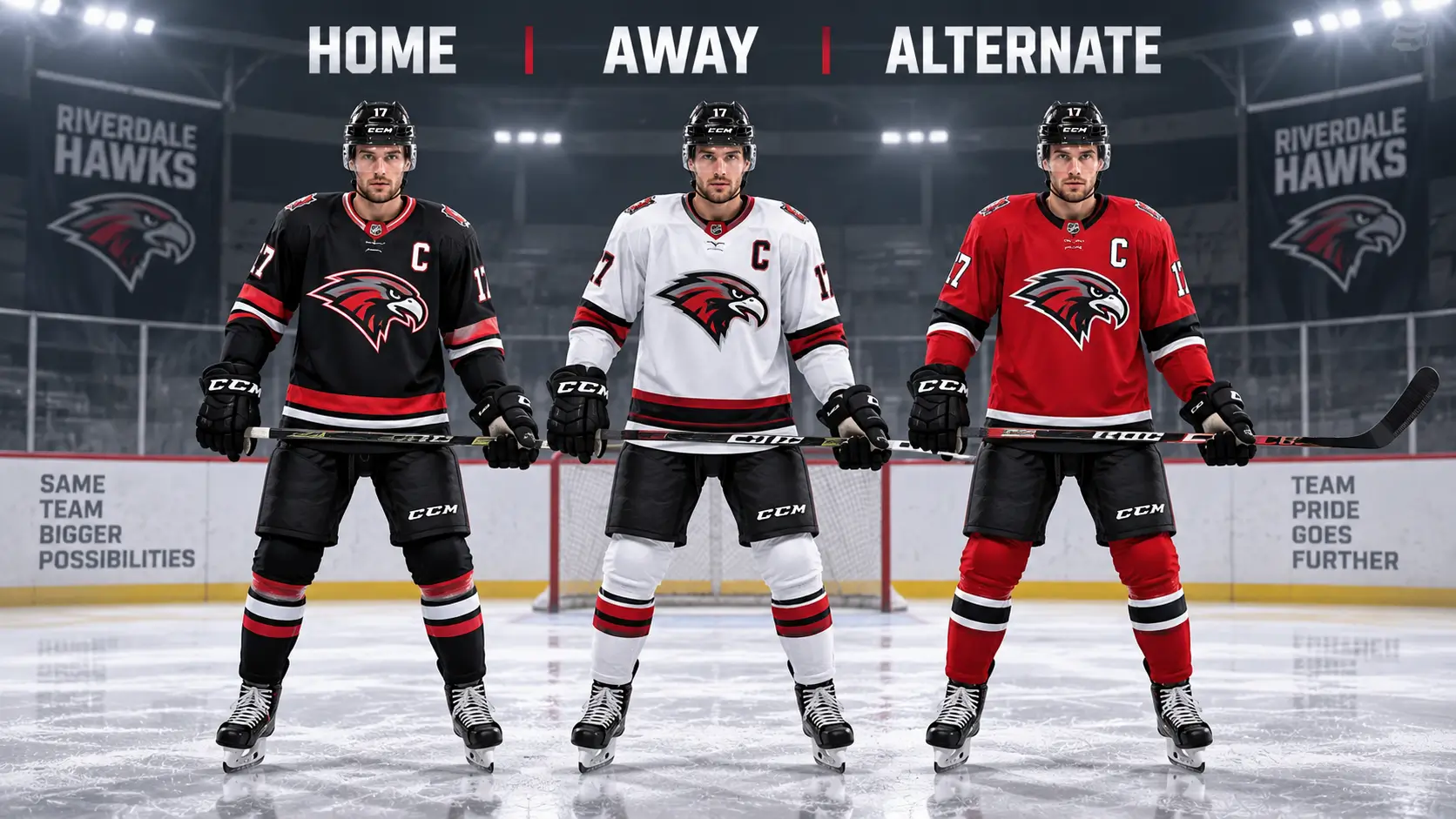
A home uniform is usually the team’s primary game set. An away uniform is normally a contrasting set used when the primary colors create a conflict or when the competition requires designated home and away colors. An alternate uniform is an additional option that may be used for selected games, tournaments, special events, branding, or another clearly defined purpose.
Those labels may sound simple enough, but the actual package can vary. A second set may mean a second jersey worn but with the same shorts and socks. It may mean a complete second jersey, shorts and sock combination. In some sports, only one garment has to change to create enough contrast. In others, the entire uniform must change.
That difference matters when you calculate quantities. Eighteen players receiving one extra jersey is a very different order from eighteen players receiving a complete second uniform. Before using the words “home set” or “away set”, define exactly which garments change.
Start With League, Association and Tournament Requirements
Before discussing colors, designs or budgets, check the rules that govern the competitions your team expects to enter. Requirements can vary by sport, age group, level of play, league and tournament. A recreational team and a high-performance travel program within the same club may not be required to purchase the same uniform package.
Don’t rely on what the team used last season or what another club appears to wear. Ask the league, association or tournament organizer what is required for your specific level of competition. If the rule book is unclear, get clarification before the order is placed.
A useful real-world example comes from Suburban FC in Canada. Its current uniform requirements vary by program: some groups require only a training kit, some require training plus a home kit, while its higher competitive levels require training, home and away kits. That is a practical reminder that
the correct number of uniform sets depends on the program rather than on a universal rule.
When reviewing requirements, confirm more than just whether a second jersey is mandatory or not. Look for rules involving color contrast, numbering, goalkeeper colors, shorts or pants, socks, manufacturer restrictions, logo placement, event-specific uniforms, and what happens when the officials determine that two teams are too similar on game day.
Planning rule: Treat competition requirements as the floor, not the entire buying decision. The rules tell you what you must have. Your schedule, laundry realities, travel demands and risk tolerance determine whether you need anything beyond that minimum.
When One Uniform Set May Be Enough
One set can be the more sensible choice when the team plays in a controlled local league, color conflicts are uncommon, the schedule leaves enough time to wash uniforms between games, and no rule requires a second look. This is particularly worth considering for younger recreational teams, short seasons, development programs, first-year teams, or organizations trying to keep participation costs manageable. A well-chosen primary uniform with strong color contrast may handle most of the season without creating unnecessary expense.
One set does not mean planning carelessly. The team still needs a procedure for the occasional color conflict. The league may allow bibs, pinnies, loaner jerseys, or another temporary solution. The important point is to know what that procedure is before match day rather than discover it at the field when it’s too late.
If one uniform set meets the rules and handles the team’s normal competition environment, there’s no prize for buying a second set early. Money that would have gone into an unused away package may be more valuable for sizing samples, better fabric, replacement stock, travel, equipment, or other team needs.
When a Home-and-Away Combination Makes Sense
A second contrasting uniform becomes easier to justify when the same problem is likely to occur repeatedly. If your team regularly faces opponents with similar colors, travels into several leagues or tournaments, or plays at a level where officials expect clear home-and-away differentiation, a second set can remove uncertainty from game day.
Home and away sets can also help teams with dense schedules. Tournament weekends may place multiple games close together; sometimes in poor weather or after a particularly physical match. A clean second jersey can be useful even when the color contrast is not the main issue. The second set does not always need to duplicate every garment. If the rules and design allow the same shorts and socks to work with both jerseys, purchasing a second jersey may solve the problem at much lower cost.
Conversely, if the alternate jersey only works with different shorts or socks, the team should calculate the real cost as a complete second combination rather than looking only at the jersey price.
Before approving home and away uniforms, write down the specific situations in which the second set will be used. If the list includes frequent color conflicts, required away colors, regular tournament use, or other predictable situations, the additional order has a practical purpose.
When an Alternate or Third Set Is Justified
An alternate uniform is harder to justify because the team already has two competition options. That does not make a third set wasteful in every case, but it raises the bar for the decision. A third look may make sense for a club that competes frequently, has a genuine third color-conflict problem, uses a special tournament or event identity, or wants a controlled way to introduce a new design without replacing the primary uniforms immediately. It may also be useful for a long competitive season in which garment rotation reduces wear.
What is not a strong reason by itself, is simply wanting another attractive design. If the alternate uniform is primarily a branding or spirit decision, say so. That allows the organization to compare the marketing or identity value against the added cost rather than presenting the third set as an operational necessity. If your team is considering an alternate because the current look feels dated, first decide whether the real issue is the number of sets or the design itself.
Our article Should You Redesign Your Team Uniform or Bring Back a Classic? covers that decision separately.
Plan for Color Conflicts Before They Happen
Color conflict is one of the strongest practical arguments for a second jersey. Two teams can use different designs and still look too similar from a distance if their dominant colors are close. Officials, players and spectators need to distinguish the teams quickly during play.
When selecting a second set, think in terms of contrast, not simply “light” and “dark.” Two medium-toned colors can still create a poor visual distinction. The second uniform should be different enough from the primary set that it solves the conflict rather than creating another version of the same problem.
Also look beyond the jersey. Shorts and socks can contribute to the overall appearance, and some competitions regulate those colors as well. If the away jersey creates good torso contrast but the rest of the uniform still conflicts with common opponents, the team may need a broader second combination.
Goalkeepers and Other Special Roles Need Their Own Uniform Plan
Goalkeepers should not be treated as an afterthought when the team decides how many uniform sets to order. In sports where goalkeepers must be visually distinct from field players and officials, their color options can affect the entire package. A team may decide that one goalkeeper jersey is enough for normal league play, only to discover that its color conflicts with an opponent, the officials, or another required garment.
If the goalkeeper also wears protective layers or position-specific pants or shorts, the practical package becomes more complicated than adding one jersey to the order. List goalkeeper requirements separately from the field-player package. Confirm which colors are acceptable, whether one or more goalkeeper jerseys are needed, whether the same shorts or pants can be used, and whether a backup should be available.
The same principle applies to any sport with position-specific or role-specific uniform requirements. A “team of 18” does not necessarily mean 18 identical sets. The final quantity should reflect what each role actually wears.
Games, Tournaments, Travel and Laundry Turnaround
The playing schedule can justify a second uniform even when the rule-book does not. A local team playing once a week has a very different laundry problem from a travel team playing several games over a weekend.
Look at the season as an operating schedule. How often can uniforms be washed properly? Who is responsible for washing them? Are players taking uniforms home individually, or is the club collecting and laundering them? Will tournament games be played on consecutive days? Could wet weather leave the only set damp, stained or unavailable for the next match?
These questions do not automatically lead to two complete sets, but they expose practical problems early. Sometimes the answer is a second jersey. Sometimes it is better laundry planning. Sometimes a team genuinely benefits from full rotation because the competition schedule is demanding enough to use both sets regularly.
Travel also increases the cost of a missing or damaged uniform. Replacing a garment at home is inconvenient; discovering a problem after the team has arrived at a tournament can be much harder. Teams that travel frequently should decide in advance how they will handle damaged, lost or unusable pieces.
Backups, Replacements and Emergency Spares
A spare is not the same thing as an entire alternate set. For some teams, a small number of carefully chosen backup garments provides more value than buying a second complete uniform for every athlete. Useful spare planning may include one or more blank jerseys in common sizes, replacement socks, extra shorts or pants, a backup goalkeeper garment, or other pieces that can solve predictable emergencies.
Whether that approach is possible depends on your personalization method and supplier reorder process.
Names and permanent player numbers can make shared spares more difficult. If every jersey is customized for a specific athlete, the team may need a different replacement strategy. Ask the supplier what happens when a garment is damaged after production, how long an individual reorder takes, and whether the same color and uniform line will remain available.
This is also where the wider apparel plan matters. Before buying extra competition pieces, make sure you know what belongs in the team’s required package. If that decision is still unclear, review Team Uniforms vs. Team Apparel: What Should Your Organization Order?.
How Extra Uniform Sets Can Change the Team Budget
The budget effect of a second uniform is easy to underestimate because teams often focus on the price of one extra jersey. The real order may include another jersey, different shorts, socks, goalkeeper pieces, names, numbers, logos, decoration, setup charges, shipping and extra replacement inventory. Multiply every added garment across the roster before deciding whether the second set is affordable. A modest difference per player can become a significant organization-wide expense once the complete package is calculated.
Also consider who pays. If the uniform cost is included in registration, the organization absorbs the increase. If families purchase the uniforms separately, the decision directly changes the cost of participation. In either case, the additional set should solve a real problem often enough to justify its cost.
Do not assume that the lowest-cost approach is always one set.
Repeated rush reorders, emergency replacements, tournament conflicts, or a poor initial color decision can cost more than planning the correct second option from the beginning. The goal is not to buy the fewest garments possible. It is to
buy the smallest reliable package for the season your team is actually going to play.
Our cluster’s cost article, How Much Do Custom Team Uniforms Cost in 2026? 2027 Outlook, looks at the wider factors that affect the final team order rather than only the advertised jersey price.
Do We Really Need Another Uniform Set?
Before approving another set, answer the 8 questions below with the actual season in mind. A pattern of “yes” answers usually means the second set is solving real operational problems. Mostly “no” answers suggest that the team may be adding cost without adding much value.
- Competition rules: Does the league, association or tournament require a second color or designated home-and-away uniforms?
- Color conflicts: Does the team regularly face opponents whose primary colors are too similar to yours?
- Game frequency: Will the team play several games before the primary uniform can be properly washed and dried?
- Tournaments and travel: Will multi-game weekends make a second jersey or complete set genuinely useful?
- Goalkeepers or special roles: Do position-specific color requirements create additional combinations that must be available?
- Emergency planning: Would a few spares solve the problem more efficiently than another full set for everyone?
- Budget: Can the organization or families absorb the complete cost without sacrificing more important uniform requirements?
- Actual use: Can you identify when the second set will be worn during a typical season?
If you cannot identify a rule, recurring conflict, schedule problem, operational need, or deliberate branding purpose for the extra set, then delay the purchase. You can always plan for a second option later if the team’s competition level changes.
Turn the Uniform-Set Decision Into Actual Quantities
Once you know whether the team needs one set, home and away uniforms, or an alternate option, stop thinking in sets and start thinking in individual garments. For example, an 18-player soccer roster may sound simple until the order is broken down into home jerseys, away jerseys, shorts, socks, goalkeeper garments, replacement pieces and any special-role requirements. The same exercise applies in hockey, baseball, softball and other sports even though the garments are different.
Build the order from the roster rather than from a supplier package name.
- Count the athletes
- Identify their roles
- List which garments each role receives
- Then add only the spare quantities the team has deliberately approved
Before finalizing sizes, use How to Size Team Uniforms: A Step-by-Step Guide for Coaches. Later in this cluster, How to Measure Players and Avoid Costly Team Uniform Sizing Mistakes goes deeper into measurement and verification.
Frequently Asked Questions
Does every team need home and away uniforms?
No. The correct package depends on competition rules, color conflicts, level of play, schedule, tournaments, travel and other practical factors. Some teams operate effectively with one primary set, while others genuinely need a contrasting second option.
What is the difference between an away uniform and an alternate uniform?
An away uniform is generally a planned contrasting option used when the primary set cannot be worn or when the competition designates home and away colors. An alternate uniform is an additional third option used for another competitive, operational, event or branding purpose.
Can a second jersey be enough instead of a full second uniform?
Sometimes. If the same shorts, pants and socks work with both jerseys and the rules permit that combination, a second jersey can provide the necessary contrast at lower cost. Confirm the complete appearance and competition requirements before ordering.
Should youth teams have two uniform sets?
Not automatically. Youth teams should use the same decision process as any other program: confirm the rules, assess likely color conflicts and schedule demands, then consider the cost to families. Younger or recreational programs may have less need for multiple sets than higher-level travel or competitive teams.
When does an alternate uniform make sense?
An alternate makes sense when the team can identify a real use for it, such as a recurring third color conflict, special competition requirement, tournament use, uniform rotation, or a deliberate club-identity purpose that the organization considers worth the additional cost.
How many spare uniforms should a team order?
There is no universal number. The answer depends on personalization, roster stability, replacement lead times, common sizes, travel, budget and whether the supplier can reproduce individual garments later. Some teams benefit more from a few strategic spare pieces than from an entire extra set.
Should goalkeepers receive both home and away jerseys?
That depends on the sport’s rules and the colors the goalkeeper may encounter. Plan goalkeeper garments separately and make sure at least one acceptable color combination will be available for the competitions the team expects to play.
When should we order the second set?
Ideally, decide before the main order is finalized so colors, sizing, decoration and quantities can be coordinated. If a second set is optional rather than required, it can also be deferred until the team has enough evidence that it will be used.
Your Next Step: Build the Order From the Team You Actually Have
By now, the team should be able to make a defensible uniform-set decision. You know what the rules require, whether one set is enough, when a contrasting second set solves a real problem, and when an alternate would be useful rather than merely attractive.
The next step is to convert that decision into quantities. Count the athletes, identify goalkeepers and other special roles, decide which garments belong in each set, add approved spares, and then calculate the actual order.
This is where the Stage 1 Quantity & Package Planner fits into the process. Instead of thinking vaguely about “18 home-and-away uniforms,” the planning system can break the package into the individual garments the team needs and help prevent missing pieces or unnecessary extras.