How Cushioning, Stability,
and Shoe Construction
Affect Comfort, Fit, and Performance
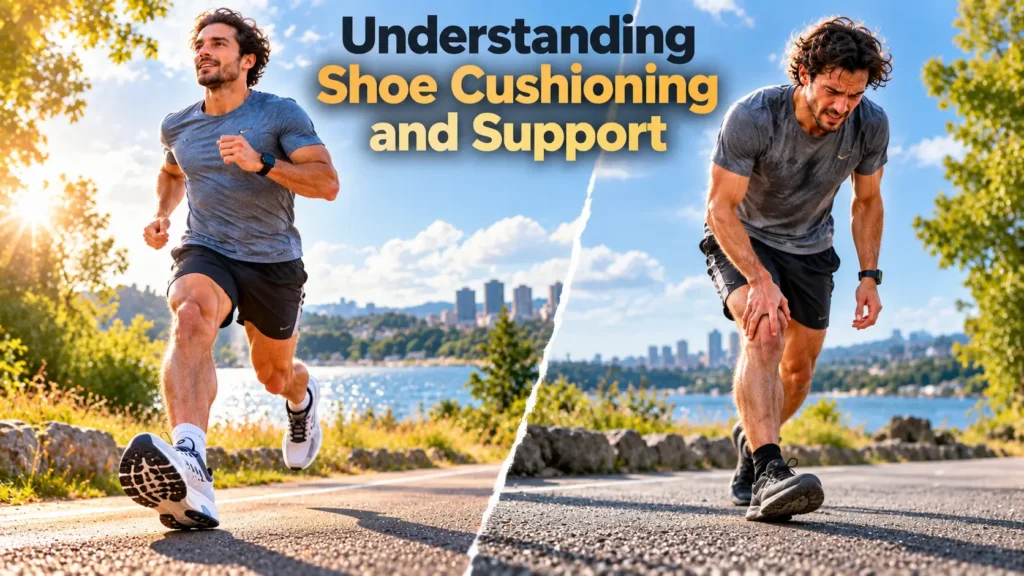
Step into two different pairs of athletic shoes and the difference is noticeable before you’ve even walked ten feet. One pair feels soft and padded. The other feels firmer and closer to the ground. A third pair may yet feel comfortable when you’re standing still but noticeably more secure when you move sideways.
Those differences can be lumped together in two terms – cushioning and support. They are related, but they ARE NOT the same thing.
-
Cushioning affects how it feels under your feet; how your shoes manage pressure and impact.
-
Support affects how it feels every; involves the sole of your feet, the heel, midfoot, upper and the overall shape of the shoe around your feet.
But neither cushioning and support really mean nothing without considering what you will actually be doing while wearing the shoes. A long distance runner moving repeatedly in one direction doesn’t move the same as a basketball player would. Basketball players need shoes that allow them to zig-zag across a court in all kinds of directions, rapid stopping and starting, and jumping, but always within the boundaries of a court.
✔️ Key Takeaway
Determine what kinds of movements you will make with those shoes first. Once you’ve matched what the shoes were built for with what you want out of them, then it’s time to compare comfort and support.
Your Cushioning and Support Roadmap
How Much Cushioning?
See what changes as shoes move from lower-profile designs to heavily cushioned platforms.
Soft vs. Responsive
A shoe can feel soft without feeling quick, stable or particularly responsive once you start moving.
What Shoe Cushioning Actually Does
Most of what shoppers call cushioning comes from the midsole, the layer between the foot and the outsole. Change the material, thickness or shape of that layer and you can change the way a shoe feels dramatically. That doesn’t mean a thick sole necessarily soft and it doesn’t mean a thin sole is necessarily hard.
Modern midsoles can be made from materials with very different compression and rebound characteristics. Manufacturers can also shape the sole so one area behaves differently from another.
Think About Three Things Under Your Foot
- How much material is there? A taller midsole generally puts more material between you and the ground.
- How easily does it compress? Two midsoles of similar thickness can feel completely different if one compresses readily and the other resists compression.
- Where is that material placed? Heel, forefoot and full-length cushioning can be emphasized differently depending on what the shoe is designed to do.
This is why buying the right shoes for the environment they were meant for should be decided first before comparing how they feel on your feet. If you’re still deciding whether you need running shoes, court shoes, trainer shoes, cleats or another specialized design, start with this guide on How to Choose the Best Type of Athletic Shoes for Your Sport.
Cushioning Cannot Change the Job of the Shoe
A plush running shoe is still just a running shoe. Adding a thick midsole will not ever give it the lateral structure of a basketball or tennis shoe. Likewise, making a training shoe softer may not make it better for lifting weights. The shoe’s basic job comes first. Cushioning fine-tunes how the shoes perform its job.
From Ground Feel to Maximum Cushioning
Labels such as “minimal”, “moderate” and “maximum” make shoe shopping easier, but there is no universal dividing line between them. Treat them as points along a spectrum rather than rigid categories.
How the Three Cushioning Levels Differ
Lower-Profile Cushioning: Less sole material separates your foot from the surface, often producing a more direct sensation of the ground. That does not automatically mean the shoe is harsh or uncomfortable: foam formulation, outsole design and fit also affect the experience. Athletes who value close ground contact may prefer this construction, but it still needs to suit their activity.
Moderate Cushioning: This broad middle range can be adapted for running, training, court sports and walking. Shoes in this category can feel soft, firm or somewhere between, depending on the foam and overall design. The label alone does not reveal how securely the shoe will handle turns, stops or uneven ground.
Maximum Cushioning: These designs generally place more midsole material beneath the foot and are common in running and walking footwear. A taller sole may provide a more protected underfoot sensation, but it does not guarantee better comfort, impact protection or injury prevention. The width, firmness and geometry of the complete shoe still matter.
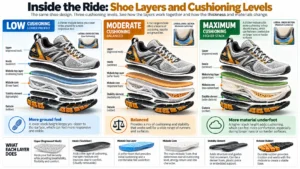
How to compare them: Consider stack height, the shoe’s intended movement and surface, and how it feels while you actually walk or run. The three categories describe a continuum, not measured percentages or performance rankings.
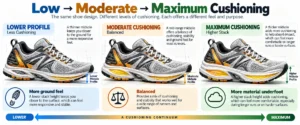
More Cushioning Changes More Than Comfort
As the foot moves farther from the ground, the rest of the shoe design becomes increasingly important. Sole width, foam firmness and sidewall geometry can determine whether a tall shoe feels planted or wobbly. That’s why two maximum-cushioned running shoes can behave very differently even when their side profiles look similar.
Less Cushioning Is Not Automatically More Stable
Being closer to the ground can help create a direct feel, but stability still depends on the complete shoe. Sole width, heel construction, upper fit and the intended movement all matter.
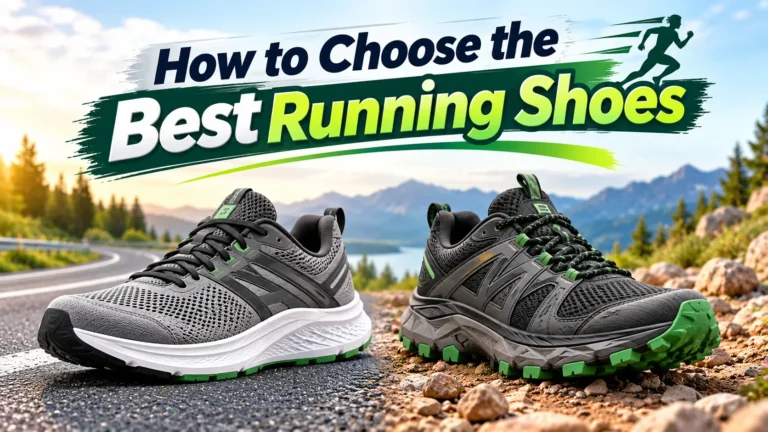
If you’re buying specifically for running, How to Choose the Best Running Shoes, provides the starting point for choosing the right running shoe category before you get this technical.
Softness and Responsiveness Are Different
Press your thumb into a midsole and you can get a rough sense of how easily the material compresses. What that test cannot tell you is how the shoe will behave through an entire stride, jump or change of direction. Softness is largely about compression. Responsiveness is about what you feel as the shoe compresses and recovers while you move.
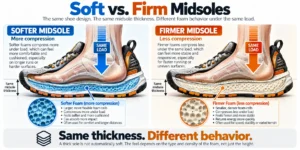
Softer Underfoot Feel
- Can feel comfortable immediately when you step inside the shoes.
- May appeal during long periods of walking or forward running.
- Can reduce the sensation of hard pavement beneath your feet.
What to Check
- Does the shoe still feel controlled when you turn or move sideways?
- Does your foot sink into the platform more than you would like?
- Does the softness still feel comfortable once your pace increases?
Firmer Underfoot Feel
- Can create a more planted sensation under load.
- May suit activities where a stable base matters.
- Can still provide substantial cushioning even without a plush feel.
What to Check
- Does the shoe feel comfortable after more than a few steps?
- Does the firmness work with your activity and surface?
- Are you choosing it because it performs well or simply because it feels “supportive” in the store?
Where Responsiveness Fits
A responsive shoe tends to feel livelier as you load and unload the midsole. Runners sometimes describe this as bounce, energy return or simply a shoe that feels quick. Those descriptions are useful for comparing how shoes feel, but they should not become part of a shopping contest. A recreational walker, distance runner, court player and strength athlete can all have legitimate reasons for preferring different underfoot sensations.
The practical question is simpler: Does the shoe behave the way you want when you move at the speed and in the direction your activity requires?
Support Is More Than Something Under Your Arch
Walk through a shoe department and “support” can sound like one feature that a shoe either has or doesn’t have. In reality, several parts of the shoe work together to control how your foot sits and moves over the sole.
The Platform
Start at the bottom. The width and shape of the sole create the base beneath your foot. A broad platform can give designers more room to manage side-to-side forces, while a narrower design may prioritize other characteristics.
The Heel
The rear of the shoe helps keep your heel positioned over that platform. Your heel should feel secure without being pinched or rubbed every time you take a step.
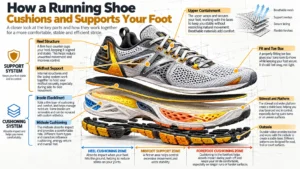
The Midfoot
Structure through the middle of the shoe can help connect the heel and forefoot so the shoe does not feel loose or disconnected beneath you.
The Sidewalls
Some shoes bring the midsole material up around portions of the foot rather than leaving the foot perched entirely on top. This can create a more contained sensation without relying on a hard piece of material pressing against the arch.
The Upper
The sole cannot control your foot effectively if the upper lets it slide around. Laces, overlays, material stretch and the shape of the upper all contribute to keeping the foot centered over the platform.
This is also why adding an insole cannot completely transform the character of a shoe. An insole may change the feel directly beneath the foot, but it does not widen the platform, rebuild the upper or turn a forward-motion running shoe into a court shoe.
Where Neutral and Stability Shoes Fit In
The neutral-versus-stability question belongs mainly to running footwear, and even there the distinction is more nuanced than it once was. A neutral running shoe generally does not use a pronounced corrective element intended to guide the runner in a particular way. A stability running shoe adds structural features intended to create a more controlled or guided ride.
Years ago, stability shoes were strongly associated with firm material placed along the inside of the midsole, particularly for runners showing overpronation. That still exists, but it is no longer the whole story. Current designs may use broader bases, sidewalls, shaped midsoles and other geometry to create stability without an obvious hard post beneath the arch.
Do Not Choose From Arch Shape Alone
You may still see simple charts telling people with flat feet to buy one type of shoe and people with high arches to buy another. That can be a starting point, but it is too crude for it to make the entire decision. Two runners with similar-looking feet can prefer different shoes because fit, movement, training, comfort and previous footwear experiences are different.
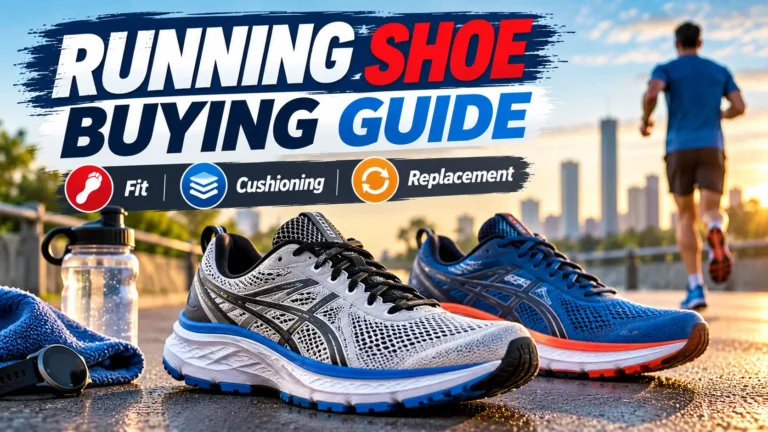
Our Running Shoe Buying Guide puts neutral and stability shoes into the complete running-shoe selection process.
The Movement Changes What You Need From the Shoe
Instead of asking, “How much support do I need?” try asking, “What forces will this shoe have to handle?” That turns an abstract footwear term into something you can actually shop for.
| Movement | What the Shoe Has to Manage | What Deserves Extra Attention |
|---|---|---|
| Distance Running | Thousands of repeated forward strides | Underfoot comfort, smooth transitions and a platform that feels stable at your running pace |
| Cutting & Pivoting | Rapid sideways loading, braking and direction changes | Lateral containment, sole width, secure upper and controlled cushioning |
| Jumping & Landing | Repeated vertical loading plus movement in several directions | Impact comfort combined with a stable landing platform |
| Strength Training | Load transferred through the foot into the floor | A predictable, stable base rather than excessive softness |
| Uneven Terrain | Changing angles, surfaces and foot placements | Secure footing, traction, protection and stability appropriate to the terrain |
| Walking | Repeated lower-intensity forward steps | Comfort, fit and an underfoot feel you can tolerate for the length of the walk |
Why Running Shoes and Court Shoes Feel So Different
This is easiest to see when you compare running shoes with basketball or tennis shoes.
- A road runner spends most of the session moving in the forward direction.
- A basketball player may sprint forward, stop hard, shuffle sideways, jump, land and change direction within a few seconds,
- A tennis player emphasizes lateral stability, controlled sliding, and outsole durability.
The basketball shoe therefore has to control forces that a road-running shoe was never primarily designed around. Extra softness is not a substitute for lateral containment.
Why Training Shoes Often Feel Firmer
A gym shoe may deliberately give up some of the plush sensation found in a road-running shoe. During strength exercises or multi-directional drills, many athletes would rather have a base that feels predictable under load. For the broader sport-by-sport breakdown, use Choosing the Right Athletic Shoes for Every Sport.
A Five-Minute Test Tells You More
Than the Marketing Copy
Shoe technology names change constantly. Your basic test does not have to change at all. Once you’ve narrowed your choices down to shoes designed for the right activity you want to do, then it’s time to compare them while the differences are fresh in your mind.
1. Stand Naturally
Notice the first impression, but do not make the decision there. A dramatic step-in softness can be appealing and still tell you very little about how the shoe behaves in motion.
2. Walk at a Normal Pace
Check whether your heel stays put, whether anything presses uncomfortably into the arch and whether the shoe bends without fighting your stride.
3. Increase the Pace
If the shoe and setting allow it, jog or move more briskly. Some midsoles feel very different once you load them harder.
4. Add the Movement Your Sport Requires
For court or training footwear, a controlled side step can reveal more than another lap around the shoe-store aisle. For walking footwear, spend more time walking. For running shoes, test them at something closer to a running motion whenever the retailer provides a safe place to do so.
5. Compare the Other Shoe Immediately
Switch pairs while you can still remember the first one. Is one heel more secure? Does one platform feel calmer when you move sideways? Does one shoe feel pleasantly cushioned while another feels mushy?
Those observations are more useful than trying to decide whether a manufacturer’s cushioning system sounds more advanced.
You are not buying a foam name. You are buying the way the complete shoe works under your foot.
If the choice is specifically between running shoes, return to the Running Shoe Buying Guide for the full fit, surface and replacement checks before ordering.
Questions Shoppers Ask About Cushioning and Support
Is more cushioning better?
No. More material underfoot creates a different type of ride; it does not automatically create a better shoe. The useful amount depends on the activity, surface, complete shoe design and what feels comfortable when you move.
Is a soft shoe more comfortable?
Sometimes at first. Long-term comfort also depends on fit, pressure points, heel security, stability and how the shoe behaves during the activity. A shoe that feels wonderfully soft while standing can feel very different once you run or cut in it.
What is the difference between cushioning and support?
Cushioning primarily concerns what happens beneath the foot as the midsole compresses and recovers. Support is broader: the sole shape, heel, midfoot, sidewalls and upper can all contribute to keeping the foot controlled over the platform.
Do I need stability shoes if I overpronate?
Not solely because of that one observation. Stability shoes are one option worth comparing, but comfort, fit, running history, movement and the complete design of the shoe also matter. If you have persistent pain or a diagnosed foot problem, footwear advice from an appropriate healthcare professional is more useful than trying to diagnose the problem from a shoe-store chart.
Can I add an insole to get more support?
An insole can change the underfoot feel and how the shoe contacts the arch, but it cannot change the entire structure. It will not widen a narrow platform, rebuild a loose upper or give a running shoe the lateral construction of a court shoe.
Can I use cushioned running shoes for the gym?
That depends on the workout. They may be fine for treadmill running and some general exercise, but heavily cushioned running shoes can feel less stable during lifting or movements where a firm connection with the floor is useful. A training shoe may be the better match for mixed gym work.
Use Cushioning and Support to Narrow the Choice
Once you stop treating cushioning and support as simple “more is better” features, athletic shoes become easier to compare.
First identify the job: running, court play, training, field sport, walking, hiking or another activity. Then look at how the shoe handles that job. Is the underfoot feel comfortable? Does the platform stay controlled? Is your heel secure? Does your foot remain centered when the movement changes?
That is enough to eliminate a surprising number of wrong shoes before brand names, colors and premium technologies ever enter the decision.
✔️ Final Takeaway
Choose the shoe for the movement first. Then use cushioning, responsiveness and support to refine the choice. A shoe that feels right standing still still has one more test to pass: it has to feel right when you move.
Continue the Footwear Series
Need to step back and choose the category first? Read How to Choose the Best Type of Athletic Shoes for Your Sport.
Shopping across several sports? Use Choosing the Right Athletic Shoes for Every Sport.
Buying specifically for running? Start with How to Choose the Best Running Shoes, then use the Running Shoe Buying Guide for the complete buying process.