Match Your Clothing to Your Workout,
Movement and Conditions
The bottom line is that you will know if you’re wearing the right clothing for your workout if you can move comfortably, manage heat and perspiration easily, and still stay focused on your activity no matter the weather conditions. Clothing that becomes heavy, traps heat, restricts movement, or needs constant adjustment just can’t cut it.
Different types of workouts place different demands on sportswear. A runner will demand that the fabrics they wear are lightweight and able to control moisture on their skin, while a weight lifter needs clothing that stays in place during squats, presses, and other compound movements. If working out outside in the elements, athletes also need to contend with temperature swings, wind, rain, visibility, and changing weather conditions.
This guide explains how to choose athletic wear based on your workout, your preferred fit, where you’re training and your personal comfort level. I know a guy that loves it when he sweats heavily during his workouts. Me? No thanks.🥵
Along with other articles on this site, this guide also covers athletic fabrics, layering, workout accessories, garment care, common buying mistakes, and considerations for teams and organizations.
✔️ Key Takeaway
Start with what you will actually be doing. The right athletic wear depends on the movements involved, how much heat and moisture the activity generates, the conditions in which you train and how the garment fits while you move. Fabric matters, but fabric alone does not determine whether workout clothing will be comfortable or suitable.
Start With the Workout
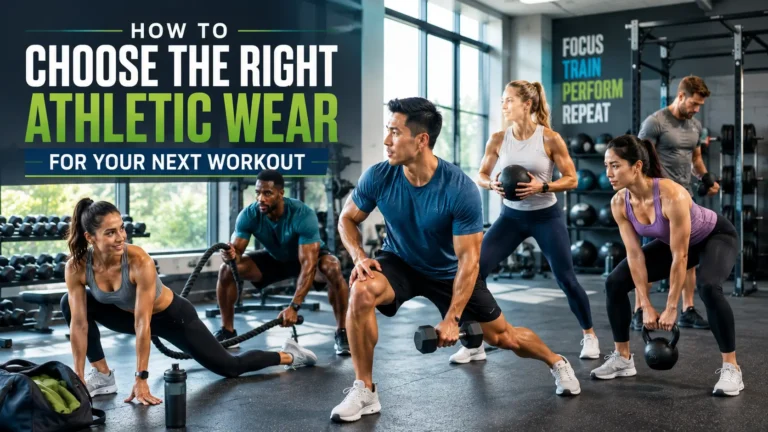
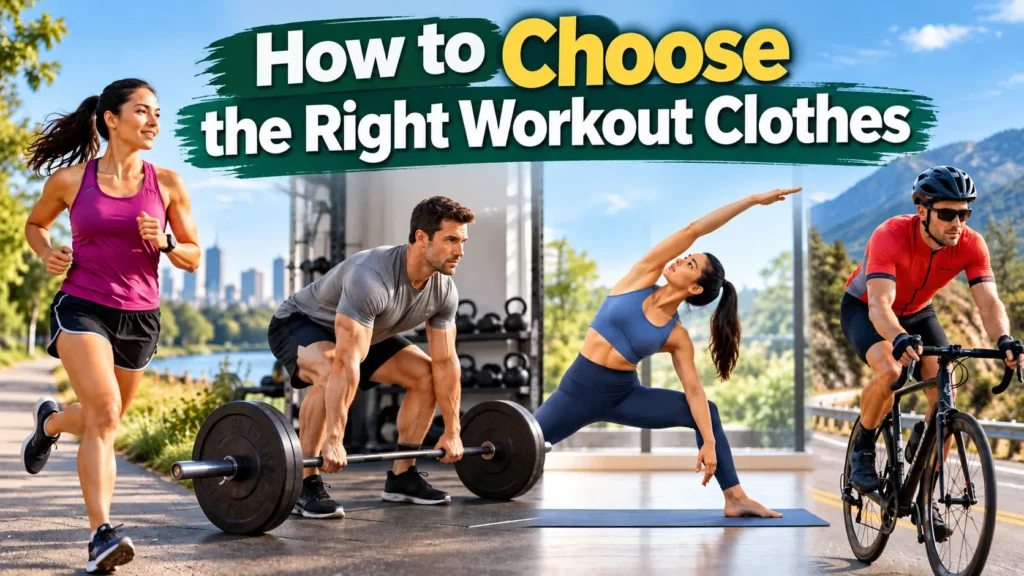
Running, lifting, cycling, yoga and high-intensity training place different demands on clothing.
Compare Fabric Properties
Look beyond the fibre name to moisture handling, drying, stretch, weight, construction and comfort.
Check Fit While Moving
A garment that fits while standing still may behave very differently when you run, squat, reach or bend.
Dress for the Conditions
Heat, cold, wind, rain, humidity and sun exposure can change what works for the same activity.
Start With the Workout, Not the Clothing Rack
Before comparing fabrics, brands or features, identify what your clothing has to do and how it’s going to help you perform. An outfit that works well for a walk or a moderate gym session may become irritating during repeated sprints, floor exercises or a long outdoor run.
Don’t be satisfied just because you’re wearing something that looks like “athletic wear”. You need to ascertain whether or not the clothing you’re going to wear for your workout stays comfortable and out of the way while you perform that particular activity?”
Running
Running involves thousands of repeated movements, so small irritations can become much more noticeable over time. Lightweight clothing, comfortable seams and garments that manage perspiration without clinging excessively are useful priorities.
Fit also needs to be tested in motion. Shorts should remain secure without restricting stride, while shirts and outer layers should allow natural arm movement. For road running in low-light conditions, visibility can become another consideration.
Strength Training
Strength training places a different emphasis on mobility and garment security. Squats, lunges, presses and deadlifts require clothing that moves through a large range without a waistband rolling, a shirt riding excessively or loose material interfering with equipment.
Extremely loose clothing can also make it harder to see body position during some movements. On the other hand, tighter clothing is not automatically better. The objective is enough freedom to move without constant adjustment.
High-Intensity and Circuit Training
HIIT and circuit workouts may combine running, jumping, floor exercises and rapid changes of direction. Clothing has to handle movement and perspiration while remaining reasonably secure.
Stretch, stable waistbands and minimal unnecessary fabric can be particularly useful when the workout moves quickly between exercises.
Yoga, Mobility and Stretching
For yoga and mobility work, unrestricted movement often matters more than heavy-duty durability. Stretchable garments, comfortable waistbands and seams that do not become irritating against the floor can make a noticeable difference.
Test the clothing through bending, reaching and rotational movements rather than judging the fit while standing in front of a mirror.
Cycling
Cycling creates prolonged repetitive movement and extended contact with the bicycle. Clothing that bunches, shifts or creates pressure points can become uncomfortable as time increases.
More specialized cycling apparel may add close-fitting construction, padding and pockets, but recreational riders do not necessarily need every technical feature. Duration, riding position and frequency should determine how specialized the clothing needs to become.
Team Practices and Training Sessions
Coaches and team managers face an additional problem: they are choosing apparel for many different bodies rather than one person. Practice shirts, training shorts, warm-ups and other teamwear should accommodate the movements of the sport while remaining practical to size, wash, replace and reorder.
Coach’s Advice
Do not approve training apparel solely from a catalogue photo or fabric description. If possible, test a sample through movements that actually occur in the sport. A garment can look fine while standing and still pull, ride up, restrict movement or become uncomfortable during practice.
Choose Fabric Properties, Not Just Fabric Names
Polyester, nylon, cotton and stretch blends all appear in athletic clothing, but the fibre listed on the label tells only part of the story. Fabric weight, knit or weave, ventilation, garment construction, fit and finishing treatments can change how two garments made from similar fibres feel during exercise.
This is also why simple rules such as “cotton is bad” or “synthetic is always better” are not particularly useful. Different materials have strengths and limitations, and research comparing sports clothing has produced mixed results under different activities and environmental conditions.
| Material | Useful Characteristics | Watch For | Common Uses |
|---|---|---|---|
| Polyester | Durable, lightweight options available, low moisture absorption, commonly engineered for athletic use | Comfort and moisture handling vary considerably by construction and finish | Performance shirts, shorts, jerseys, training apparel |
| Nylon | Smooth feel, durability, flexibility and useful moisture-handling properties in many constructions | Performance varies by garment weight, knit and blend | Leggings, shorts, fitted apparel, outer layers |
| Cotton | Soft, familiar and comfortable for many people during lower-intensity activity | Absorbs moisture and can become heavier or remain wet longer during sweat-heavy activity | Walking, casual training, lower-intensity workouts |
| Stretch Blends | Added elasticity and freedom of movement | More stretch is not automatically better; fit and garment construction still matter | Yoga, leggings, fitted tops, training shorts, compression-style garments |
What Does Moisture-Wicking Actually Mean?
A moisture-wicking garment is designed to move moisture through or across the fabric so it can spread and evaporate more effectively. That does not mean every garment marketed as “moisture-wicking” will perform identically.
Fabric construction, surface treatments, garment fit, environmental humidity and how heavily the wearer is sweating can all influence the result.
Pro Tip
When comparing athletic clothing, ask what the fabric is designed to do rather than relying on a technical-sounding product name. Breathability, drying time, stretch, weight and durability are easier characteristics to compare.
Teams making more detailed fabric decisions can use the Team Uniform Fabric Selector to compare performance priorities for team apparel.
Check Athletic Clothing While You Move
Size labels tell you whether a garment is likely to fit. They do not tell you whether it will work during your workout.
A shirt may feel perfectly comfortable while standing but pull across the shoulders during an overhead movement. Shorts may fit at the waist but restrict a deep squat. Leggings can feel secure until repeated bending or running causes the waistband to shift.
Instead of asking only, “Does this fit?” ask, “Does this still fit when I perform the movements this workout requires?”
Workout Clothing Fit Check
Try these seven movements while wearing the garment. Check a box only when the garment passes that test. An unchecked box may mean not tested or needs attention; record the difference in your notes.
Fit notes and decision
Seven passes indicate the garment passed these basic checks, not a guarantee of comfort in every workout.
All seven tests checked
Review your notes before making a purchase decision.
Compression Is a Feature, Not a Requirement
Some athletes prefer close-fitting or compression-style clothing because it feels supportive, reduces loose fabric or works well for a particular activity. Others simply find a looser fit more comfortable.
Compression should therefore be treated as a preference or activity-specific feature rather than a requirement for a successful workout outfit. Marketing claims about circulation, recovery or performance should not substitute for comfort, appropriate fit and the needs of the activity.
The Same Workout May Need Different Clothing Tomorrow
Activity is only half of the decision. The environment changes what clothing has to do.
An outdoor run on a cool, dry morning creates different requirements from the same run during high heat and humidity. Wind, rain, direct sunlight and rapidly changing temperatures can also affect whether a garment remains comfortable.
Hot Conditions
In warm conditions, lightweight clothing, ventilation and moisture management usually become higher priorities. Fit matters as well. Clothing that traps unnecessary heat or becomes increasingly uncomfortable as it gets wet can make an already difficult workout less pleasant.
The American College of Sports Medicine advises loose-fitting, lightweight, moisture-wicking clothing among its precautions for exercise in hot conditions. :chatgpt-content-reference{index=”3″}
Cold and Variable Conditions
Layering allows clothing to change with the workout. An outer layer that feels necessary during a cold warm-up may become excessive once exercise intensity increases.
Rather than relying on one heavy garment, several appropriate layers can make it easier to add or remove insulation as conditions and activity levels change.
Sun Exposure
Outdoor athletes should also consider UV exposure. Clothing can form part of a broader sun-protection strategy, and some garments carry an ultraviolet protection factor (UPF) rating. Fabric density, coverage and whether clothing is wet can affect protection. The CDC recommends protective clothing alongside other sun-safety measures. :chatgpt-content-reference{index=”4″}
Go Deeper on Weather
This article only covers the environmental decision at a high level. Our dedicated guides to athletic wear for different climates and sportswear for hot weather go further into choosing apparel for changing conditions.
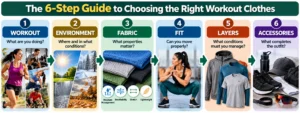
Build the Outfit as a System
Once you know the workout, environment, fabric priorities and fit requirements, the individual pieces become easier to choose.
- Start with the main activity. Identify the movements, intensity and expected workout duration.
- Account for the environment. Indoor or outdoor, hot or cold, dry or humid, calm or windy.
- Choose useful fabric properties. Prioritize the characteristics the activity actually requires.
- Test movement. Make sure the clothing works while running, bending, reaching, squatting or rotating as appropriate.
- Add layers only when needed. Outerwear should solve an environmental problem rather than simply add bulk.
- Finish with footwear and accessories. Socks, shoes, hats, gloves and other items should work with the rest of the outfit.
When One Workout Outfit Becomes a Team Apparel Decision
The same principles become more important when a coach or organization is choosing training apparel for an entire roster.
A team has to consider more than whether one athlete likes a shirt. The clothing may need to work across different body types, survive frequent washing, accommodate the movements of the sport and remain available when replacement players or new roster members need additional pieces.
This is where individual workout-apparel decisions begin connecting to the broader team-uniform planning process.
The Team Uniform Ordering Process explains why fabric, fit and intended use should be settled before an organization reaches the actual ordering stage.
Coach’s Advice
For team training apparel, test samples on more than one athlete whenever possible. Different body types can expose fit, length and movement problems that are easy to miss when one person approves the garment.
Common Workout-Clothing Buying Mistakes
Most poor athletic-wear decisions do not happen because someone chose the “wrong” brand. They happen because the clothing was selected without enough attention to how it would actually be used.
- Buying for appearance first. A garment can look excellent and still be uncomfortable during the movements your workout requires.
- Assuming expensive means appropriate. Premium construction may be worthwhile, but price alone does not tell you whether a garment suits your activity.
- Judging fit while standing still. Athletic clothing needs a movement test.
- Believing every performance claim. Terms such as cooling, moisture management, compression and performance should be considered alongside construction, fit and intended use.
- Ignoring the environment. Indoor clothing does not automatically translate well to heat, wind, rain or cold.
- Buying too much before testing it. Try a garment during an actual workout before buying several identical pieces whenever practical.
Common Mistake
Do not build an athletic wardrobe around a fabric name alone. Two polyester shirts can differ substantially in weight, knit, ventilation, stretch, construction and comfort.
Take Care of Performance Apparel
Always start with the manufacturer’s care label. Athletic garments can combine different fibres, elastic components, printed graphics, reflective details and specialized finishes, so one washing routine is not appropriate for every product.
Promptly dealing with wet or heavily perspired clothing can also prevent it from sitting damp in a gym bag. When possible, allow garments to dry before they remain stored for extended periods.
Frequently Asked Questions
What is the best fabric for workout clothes?
There is no single best fabric for every workout. Activity, intensity, climate, garment construction, fit and personal comfort all influence the decision. Research comparing natural and synthetic sports clothing has produced mixed results rather than identifying one universally superior material.
Is cotton bad for working out?
No. Cotton can be comfortable for lower-intensity activities and for people who prefer its feel. Its main limitation during sweat-heavy exercise is that it absorbs moisture and may remain wet or become heavier. That can make other materials or constructions more comfortable for some workouts.
Should workout clothes be tight or loose?
They should be secure enough for the activity without unnecessarily restricting movement. Some workouts work well with closer-fitting clothing, while others are comfortable with a looser fit. Test the garment through the movements you will actually perform.
Do I need expensive athletic wear to exercise?
No. Fit, comfort and suitability for the activity matter more than price or brand recognition. More expensive garments may offer particular construction, materials or features, but those features only have value when they solve a problem you actually have.
What should teams look for in training apparel?
Teams should consider movement, comfort, climate, durability, sizing consistency, washing requirements and replacement availability. Coaches should also think about how training apparel fits into the organization’s broader uniform and apparel system.
Choose for the Workout in Front of You
The best place to start is not with a logo, trend or technical claim. Start with the workout.
Identify how you will move, where you will train and what tends to make clothing uncomfortable during that activity. Then choose fabric properties, fit and layers that address those needs.
That approach works whether you are buying one training shirt for yourself or helping select practice apparel for an entire team.