Finding the Right Running Shoes:
What Matters Most
Buying running shoes gets easier when you stop looking for the universally “best” shoe and start narrowing the choices around how you actually run. Your main running surface, training routine and fit requirements should come before brand, appearance or technical features. Once those basics are clear, cushioning, support, construction and price become much easier to compare.
This guide takes you through that buying process—from choosing the appropriate shoe category and checking fit to deciding when an older pair needs replacing and what to verify before placing an order.
Key Takeaways
Buy for your feet and your running first. Narrow the shoe type, check fit on both feet, compare cushioning and support, and test how the shoe feels while moving. Before ordering, verify the retailer’s return policy and the total delivered cost.
Support Type
Understand neutral and stability shoes without choosing from labels alone.
Fit & Sizing
Check toe room, width, heel security and comfort on both feet.
Feel & Surface
Match cushioning and shoe construction to comfort and running conditions.
Training Goals
Decide whether you need an everyday trainer or more specialized footwear.
Replace & Maintain
Watch the shoes and how they feel instead of relying on one mileage rule.
Avoid Mistakes
Don’t buy from appearance, price, brand or technical claims alone.
Final Buying Check
Confirm fit, use, comfort, price and return terms before ordering.
Compare Retailers
Check fitting help, selection, returns, shipping and total delivered cost.
Neutral vs. Stability Running Shoes: Start With the Difference
Running-shoe descriptions commonly divide models into neutral and stability categories. The labels are useful for narrowing choices, but they shouldn’t make the buying decision by themselves. A neutral shoe generally allows the foot to move without additional stability structures designed specifically to influence that movement. A stability shoe incorporates features intended to provide additional guidance or support.
What About Pronation?
Pronation is a normal part of walking and running. The amount and timing vary between people. That means seeing your foot roll inward—or looking at a footprint or worn outsole—doesn’t automatically tell you which category to buy.
Neutral vs. Stability at a Glance
| Factor | Neutral Shoe | Stability Shoe |
|---|---|---|
| Basic Design | No added stability system specifically intended to guide excessive movement | Includes design features intended to provide additional guidance or support |
| Who Might Compare It? | Runners comfortable in neutral footwear | Runners considering additional support or guidance |
| How It May Feel | Depends heavily on model, geometry and cushioning | Depends heavily on the type and amount of stability used |
| Buying Decision | Compare fit, comfort and how the individual shoe feels while you move rather than choosing from the category name alone. | |
If this is the main decision you’re trying to make, continue with Neutral Shoes vs. Stability Shoes: What’s the Difference?. That guide handles the subject in detail while this buying guide moves on to the next step: fit.
Fit Comes Before Features
You can choose the correct shoe category and still end up with the wrong shoe if it doesn’t fit your feet. Don’t treat the size printed on your current shoes as a guaranteed size in another model. Shoe shape, internal volume and sizing can vary between manufacturers—and even between models from the same manufacturer.
Check Both Feet
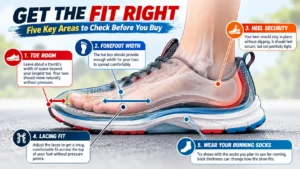
Feet aren’t always identical in length or width. Fit the shoe to the foot that needs more room rather than trying to make the tighter shoe work.
Check the Toe Box
The toe box should give your toes room without allowing the entire foot to slide around inside the shoe. Check both length and width. If the front of the shoe feels cramped across the forefoot, simply buying a longer shoe may create too much space in front without solving the width problem.
Check the Heel
Your heel should feel securely held without uncomfortable pressure. Repeated lifting or sliding can create friction once you start running. The heel counter and surrounding upper contribute to how securely the rear of the foot is held.
Try the Shoes With Your Running Socks
Wear the type of socks you normally use when running. Sock thickness changes the amount of room available inside the shoe.
Move Before You Decide
Walk around. Jog if the store or fitting environment permits it. Pay attention to slipping, rubbing, pressure, pinching or any sensation that becomes more noticeable once you move.
Don’t buy an uncomfortable running shoe because you expect it to stretch or “break in.” Minor changes can occur with use, but a poor basic fit is a reason to try another size, width or model.
Compare Cushioning After You’ve Narrowed the Fit
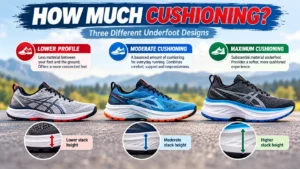
Once a shoe fits properly and suits your activity, cushioning becomes a useful comparison point. Cushioning isn’t simply a choice between “more” and “less.” Different materials and shoe geometries can make footwear feel soft, firm, responsive, flexible or highly structured. The midsole is responsible for much of this underfoot experience.
Don’t Judge Cushioning by Height Alone
A tall midsole doesn’t automatically mean the shoe will feel softer or work better for longer runs. Likewise, a lower-profile shoe isn’t automatically faster or more responsive. Compare how the individual shoes feel on your feet and whether that feeling makes sense for the way you intend to use them. For the deeper technical explanation, use Athletic Shoe Cushioning and Support.
Match the Outsole to Your Main Running Surface
Your normal running surface should already have helped narrow the shoe category. Before buying, look at how the bottom of the shoe is designed for that environment. A road running shoe generally uses an outsole intended for relatively predictable hard surfaces. A trail running shoe may use deeper lugs and a more aggressive pattern to provide traction on loose or uneven terrain. The outsole also affects durability, so consider where most of your mileage will actually occur.
If you’re still deciding between road, trail, racing and walking footwear, use Road Running Shoes vs. Trail Running Shoes vs. Racing Shoes vs. Walking Shoes.
Match the Shoe to Your Training Goals
You don’t necessarily need a different pair of shoes for every type of run. Many runners can handle much of their routine with one comfortable, versatile pair. A daily trainer is designed for regular training and is a practical starting point for many recreational runners.
When One Pair May Be Enough
If most of your runs use similar surfaces, distances and effort levels, a versatile everyday shoe may cover the majority of your needs.
When Specialized Shoes Become More Useful
A second or specialized pair can make more sense when your activities become substantially different—for example, moving regularly between roads and technical trails or adding dedicated racing footwear. A racing shoe may emphasize low weight and responsive construction, but those characteristics don’t automatically make it a better everyday training shoe.
Start with the footwear required for the running you already do. Add specialized shoes when your training creates a clear reason for them—not because another category exists.
Know When Your Running Shoes Need Replacing
Running shoes don’t stop working at one universal mileage number. Wear varies with the shoe, runner, surfaces, gait, body weight and how frequently the footwear is used. Instead of relying on mileage alone, watch for changes in the shoes and changes in how they feel.
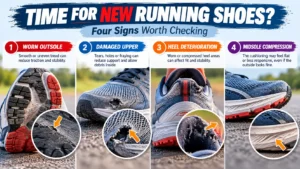
Five Signs Worth Checking
- Outsole wear: Tread or rubber has worn substantially in high-contact areas.
- Changed cushioning: The shoes feel noticeably different underfoot from when they were newer.
- Upper damage: Tears, holes or structural damage affect how securely the shoe holds the foot.
- Fit changes: The shoe no longer holds the foot as securely as it once did.
- Persistent discomfort: A familiar shoe has begun producing discomfort that wasn’t previously present.
Simple Care Can Help
Allow wet shoes to dry thoroughly between uses. Remove loose dirt and mud rather than leaving it embedded in the upper and outsole. Follow the manufacturer’s cleaning instructions rather than assuming every running shoe can be machine washed or exposed to high heat. If you use the same pair frequently, giving the shoes time to dry between runs can also make them more pleasant to wear.
Replacement rule: Mileage can be a useful record, but treat it as context rather than an expiration date. Inspect the shoe and pay attention to meaningful changes in fit, structure and comfort.
Common Running Shoe Buying Mistakes
Choosing the Brand Before the Shoe
Brand preference can narrow a search, but it shouldn’t override fit and intended use. Manufacturers produce multiple models for different runners and activities.
Buying the Same Size Without Trying the New Model
Your usual size is a starting point, not a guarantee. Check the fit whenever you change models or manufacturers.
Assuming More Cushioning Means More Comfort
Some runners prefer softer or thicker cushioning; others don’t. Judge the actual shoe rather than the amount of visible foam.
Buying a Trail Shoe for Road Running Because It Looks More Durable
Extra trail traction and protection solve trail-specific problems. They aren’t automatically advantages on pavement.
Buying the Cheapest Shoe Without Comparing the Use
A sale price is useful only when the discounted shoe still fits and suits your running.
Ignoring the Return Policy
This is especially risky when buying online. Before ordering, find out whether shoes can be returned after being tried on, how long the return period lasts and who pays return shipping. With those mistakes out of the way, you’re ready for one final check before buying.
Ready to Buy These Running Shoes?
Work through these checks before placing the order. If an important answer is still uncertain, compare another size, model or retailer before buying.
Ready to Compare the Seller
You’ve checked the shoe itself. Now compare retailer service, availability, return terms and total delivered cost before placing the order.
Compare the Retailer Before You Place the Order
Once you’ve found a suitable shoe, the seller becomes part of the buying decision. This matters most when you’re buying online, ordering an unfamiliar model or aren’t completely certain about sizing.
| Where You Buy | Potential Advantage | What to Check |
|---|---|---|
| Specialty Running Store | In-person fitting and comparison between models | Available brands, fitting process, prices and return policy |
| Brand Website | Current product specifications, colors and size availability | Shipping, returns, trial policy and Canadian availability |
| Multi-Brand Retailer | Easy comparison across several manufacturers | Authorized products, inventory, returns and total delivered price |
| Online Marketplace | Broad selection and potentially aggressive pricing | Seller identity, authenticity, condition, return terms and warranty implications |
For the deeper retailer comparison—including what to check when buying online—continue to Where to Buy Quality Athletic Footwear.
Running Shoe Buying FAQ
Should running shoes be larger than everyday shoes?
Don’t automatically buy a larger numerical size. Running shoes need enough room for the toes and forefoot while still holding the foot securely. Because sizing and shoe shape vary, judge the actual fit rather than relying on a fixed size adjustment.
How much room should I have in the toe box?
Your toes should have room to move without repeatedly contacting the front of the shoe, but the shoe shouldn’t be so long that the foot slides excessively. Width and toe-box shape matter as well as length.
Should I buy neutral or stability running shoes?
Don’t make the choice from pronation or a footprint test alone. Compare suitable models for fit and comfort, and consider whether additional stability features feel beneficial when you move.
Is more cushioning better for running?
Not necessarily. Cushioning preferences vary, and midsole height doesn’t tell you exactly how a shoe will feel. Compare the actual underfoot experience and whether it suits your intended use.
How often should running shoes be replaced?
There isn’t one replacement point that applies to every runner and shoe. Track use if helpful, but also inspect outsole wear, structural condition, changes in fit and changes in cushioning or comfort.
Should I buy running shoes online?
Online buying can work well when you know the model and fit, but check return and exchange terms carefully. When you’re uncertain about sizing or shoe type, being able to compare models in person can be valuable.
Continue With the Footwear Guide You Need
If you’ve completed the buying process but still have a specific question, continue with the guide that matches it:
- Need the overall starting point? How to Choose the Best Running Shoes
- Need more help with cushioning and support? Athletic Shoe Cushioning and Support
- Choosing between neutral and stability? Neutral Shoes vs. Stability Shoes
- Comparing road, trail, racing and walking shoes? Running Shoe Types Comparison
- Ready to compare retailers? Where to Buy Quality Athletic Footwear
The buying process doesn’t need to end with finding the shoe with the most technology or the strongest reviews. It ends when you’ve found a shoe designed for your activity that fits comfortably—and you’ve confirmed that the seller gives you reasonable terms if the fit isn’t right.