Can Parents Put Team Logos on Spirit Wear?
Oh no! You just found out your child’s soccer team needs new hoodies for an upcoming tournament. As your child’s parent, you already know a local printer who can make them at a reasonable price, and several families are ready to order. What a simple plan. Nothing can go wrong, right? All you need to do is put the team logo on the front, add the players’ names, and collect the money. And then you put your thumbs under armpits, smile and call it a day, right?
Not so Fast. Before that order goes to the printer, you need to ask a very important question that needs answering:
Are parents actually allowed to use the team logo?
Well, that answer is – Not automatically! A team logo may be protected by copyright, trademark rights, or both. The organization that owns or controls the logo may have rules about who can reproduce it, which products can carry it, and whether merchandise can be sold. These questions become particularly important when parents, booster clubs, fundraising committees, or independent sellers want to produce spirit wear outside the organization’s regular uniform purchasing program.
The good news is that many organizations can authorize appropriate merchandise projects.
The key is to establish:
- who controls the branding
- who obtains the necessary permission
- and whether any supplier agreements apply before spending money
This guide explains what parents and team supporters should check before printing logos on hoodies, T-shirts, hats, jackets, and other apparel.
✔️ Five Key Takeaways
- Being a team parent, volunteer, or coach does not automatically give you permission to reproduce the team’s logo.
- Logo ownership, trademark rights, club policies, and supplier agreements may affect merchandise production.
- Free giveaways and fundraising sales can both require authorization.
- Written approval should identify the design, products, quantities, permitted uses, and any conditions.
- Confirm artwork and printing details before collecting nonrefundable payments or approving production.
At a Glance: Team Logo Permissions for Spirit Wear
ESTABLISH WHO CAN AUTHORIZE THE LOGO
Who Owns the Team Logo Used on Spirit Wear?
Before reproducing a team logo, you must identify who owns or controls it in the first place. That answer could be different if the question becomes who controls the name of the team printed on the jersey. A school may control its athletic logo. A sports club may own its registered branding. A league may license a shared design to participating teams. In other situations, a designer or outside organization may retain certain rights.
Copyright law can protect original artistic expression in a logo, while trademark rights can protect branding that identifies the source of goods or services. The rights involved depend on the design, its history, and applicable laws in force at the time. Permission to display a logo on an official uniform doesn’t necessarily include permission to reproduce it on merchandise for sale.
Example 1: A Volunteer Designed the Club Crest
A volunteer creates a new club crest for a youth soccer organization. The club uses it on uniforms, its website, and tournament banners. Two years later, a parent committee wants to print the crest on fundraising hoodies. The committee shouldn’t assume that the club owns every right to the artwork merely because it used the crest for several seasons already. The club may have obtained ownership or a suitable licence from the designer, but that should be verified beforehand.
If the club has the necessary rights, it can decide who may use the design and under what conditions. If ownership or licensing is unclear, the club may need to resolve that issue before approving additional merchandise.
Related guide: Who Owns Your Team Uniform Design and Logo?
PARENTS, VOLUNTEERS AND FUNDRAISING GROUPS
Can Parents and Booster Clubs Use Team Logos Without Permission?
Parents and booster clubs often provide valuable financial and volunteer support to youth sports programs. They organize tournaments, arrange transportation, collect donations, and sell merchandise to help cover team expenses. However, supporting an organization does not automatically grant permission to reproduce its branding.
A booster club may be part of the school’s or sports club’s formal structure, or it may operate as a separate organization. That distinction can affect its authority to use logos, approve merchandise, and enter supplier agreements.
When a Booster Club Is Officially Authorized
An organization may give its booster club standing permission to produce certain merchandise. The authorization might cover approved designs, specified products, and sales supporting designated programs. Even with an ongoing arrangement, organizers should confirm if the planned products fall within permissions already granted.
When Parents Organize an Independent Fundraiser
A group of parents might create a merchandise project without formal involvement from the club. They may intend to donate every dollar of profit back to the team. That fundraising purpose does not, by itself, establish a right to use the team’s logo. The group should contact the appropriate club or school representative, explain the project, and request written approval before accepting orders.
Fundraising Does Not Automatically Create Logo Rights
Even when proceeds support the team, the organization may still require approval of the artwork, its merchandise, the chosen supplier, and any sales arrangements. Obtain those permissions before printing or advertising branded products.
Does Logo Permission Depend on How the Spirit Wear Will Be Used?
In a word – Yes! An organization may distinguish between personal items, free giveaways, team fundraisers, and merchandise sold to the general public. The same logo might be authorized for one purpose but not another. The organization may also have different requirements for products distributed only to team members and those offered through a public storefront.
The following examples illustrate common permission questions. They are not automatic legal rules or guarantees of approval.
| Spirit Wear Activity | Permission Considerations | Recommended Action |
|---|---|---|
| One personal hoodie | Personal use does not necessarily eliminate copyright, trademark, or club-policy concerns. | Check if the organization permits personal reproductions of its logo. |
| Team gift or giveaway | Producing multiple items may require authorization even when recipients do not pay. | Confirm approval for the design, quantity, and intended recipients. |
| Fundraising merchandise | Logo rights, organizational approval, and sales conditions may apply. | Request written permissions covering the fundraising project. |
| Public online store | Broader distribution can introduce additional branding, sales, and supplier restrictions. | Obtain approval for the storefront, products, artwork, and sales period. |
| Commercial merchandise business | Producing goods for an independent business may require a formal licence. | Discuss licensing terms with the rights holder before offering products. |
What If the Merchandise Is Given Away for Free?
Not charging money does not automatically eliminate the need for permission. Reproducing protected artwork may still involve rights that belong to the owner or an authorized licensee. A school or club may welcome a volunteer’s plan to distribute complimentary team shirts, but it may still want to approve the design, printing quality, and use of its name.
What If Parents Only Use the Team Name?
Using a team name without its graphic logo does not immediately remove every branding issue. Names can also function as trademarks, and organizations may have policies governing how their identities appear on merchandise. Ordinary descriptive references and branded merchandise are not always treated the same way under the law.
When the proposed design is intended to look like official team merchandise,
confirm the organization’s requirements first.
What If Parents Create a Different Design?
An original design that does not reproduce protected artwork may reduce some concerns, but it can still raise questions if it uses a protected team name or creates the impression of an official endorsement. A safer approach is to present the proposed design to the organization and ask if it can be approved for the intended purpose.
CHECK EXISTING PURCHASING AGREEMENTS
Can an Exclusive Uniform Supplier Agreement Restrict Spirit Wear?
It may. A school, league, or sports club can have a purchasing agreement that covers more than official competition uniforms. Some agreements are limited to game jerseys and other required team apparel. Others include practice wear, warm-ups, fan merchandise, online stores, or products bearing the organization’s logo. The exact coverage depends on the agreement and the purchasing rules adopted by the organization.
Example 2: Parents Want to Use a Different Printer
A youth softball club purchases its game uniforms from a designated supplier. Parents find a nearby printing company offering lower prices on tournament T-shirts.
Before placing the order, the parents need answers to two separate questions:
- Does the club authorize the proposed use of its logo?
- Does the club’s supplier agreement allow the merchandise to be produced by another company?
Permission to use the logo does not necessarily waive a purchasing restriction. Likewise, permission to use another printer does not automatically grant the rights to reproduce the artwork. The club may be able to approve an exception, but the parents should obtain that approval before committing funds.
Related guide: Can Your Sports League Require an Exclusive Uniform Supplier?
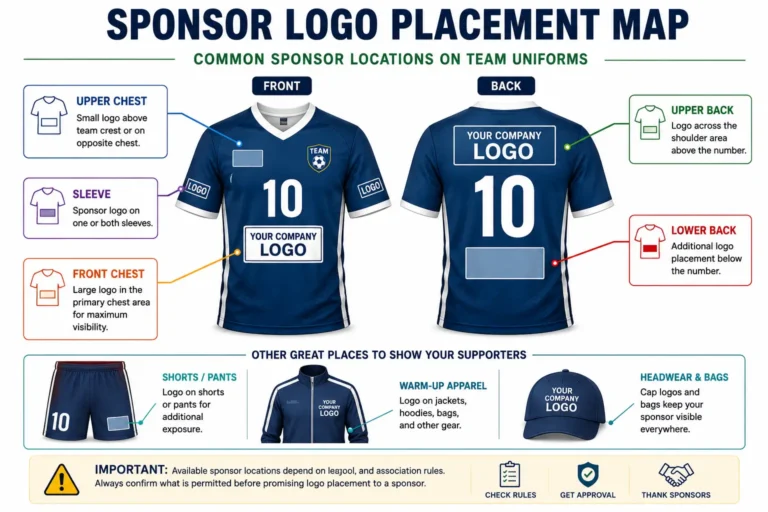
Can Parents Add Sponsor Logos to Team Spirit Wear?
Adding a business logo creates another question that requires permission. The team may have approval to use its own crest but not the branding of an outside sponsor. A sponsor logo belongs to or is controlled by the relevant business or rights holder. The sponsor may have requirements about colours, placement, proportions, and which products may display its branding.
A sponsor agreement may authorize the logo on official jerseys without covering fundraising hoodies, retail merchandise, or promotional giveaways.
Example 3: A Local Business Sponsors the Team
A local restaurant contributes money toward a youth hockey team’s uniforms. Its logo appears on the back of the team’s jerseys.
Later, parents decide to sell supporter T-shirts featuring the team crest and the restaurant’s logo. The original sponsorship arrangement may not authorize that additional merchandise. Organizers should check the sponsorship terms and obtain any necessary approval before including the restaurant’s branding.
Approve Every Logo in the Design
Check the team logo, school or league branding, sponsor marks, and any third-party graphics separately. Approval from one rights holder does not automatically cover the others.
How Should Parents Prepare Approved Spirit Wear for Printing?
Once the organization has approved the merchandise project, the next step is preparing artwork and confirming production details. Permission to use a logo does not mean that a parent or printer can alter its colours, proportions, lettering, or layout. Organizations may have branding standards that must be followed.
Use the Approved Logo Files
Ask the club or school for its authorized artwork rather than copying a logo from a website, social media image, or photograph of a jersey. Where available, vector artwork can help the printer reproduce the design cleanly at different sizes. Files such as SVG, EPS, and certain PDFs may contain vector graphics, although the file extension alone does not guarantee that the artwork is suitable for production.
Choose a Decoration Method That Suits the Garment
The printing method chosen will affect the appearance, durability, cost, and minimum order quantities of the uniforms. For example, screen printing may be practical for larger runs of matching T-shirts, while embroidery is often used on hats, jackets, and heavier garments. The best method depends on the design, garment material, order quantity, and the supplier’s capabilities.
Approve the Production Proof
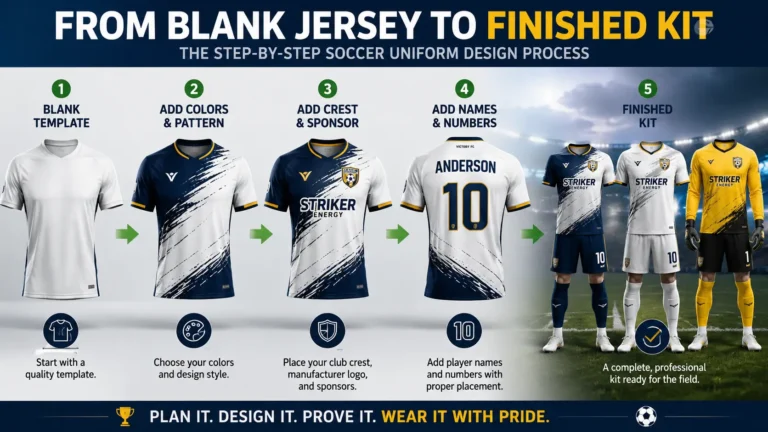
Before manufacturing begins, request a uniform proof or equivalent merchandise proof showing the proposed decoration. Check the logo’s size, placement, colours, spelling, garment colour, and any personalized names or numbers. Also confirm that the proof matches the design approved by the organization.
Confirm the Order and Reorder Terms
Ask if the supplier involved can produce additional garments after the original order and if setup charges will apply again. For a fundraising project, you should also confirm who it is that handles payments, exchanges, incorrect sizes, damaged products, and unsold merchandise.
Keep Approval and Production Records Together
Save the written logo permission, approved design, supplier quote, production proof, and final order details. These records can help resolve misunderstandings if a question arises after the merchandise has been produced.
BEFORE ACCEPTING ORDERS OR PAYMENTS
Team Spirit Wear Permission Checklist for Parents and Booster Clubs
Use this 12 point checklist before producing merchandise that carries a school, club, league, or team logo.
- Identify the rights holder: Determine who owns or controls the logo and team branding.
- Confirm the organizer’s authority: Establish whether the parent group or booster club has permission to conduct the project.
- Describe the intended use: Specify whether the merchandise is for personal use, giveaways, fundraising, or public sale.
- List the products: Identify the T-shirts, hoodies, hats, jackets, or other garments to be produced.
- Confirm supplier restrictions: Check whether an approved or exclusive supplier must be used.
- Verify all branding: Obtain permission for team logos, sponsor marks, and any additional protected designs.
- Obtain written approval: Record the authorized products, designs, quantities, and any sales conditions.
- Use approved artwork: Request production-ready files from the organization or authorized designer.
- Review the proof: Confirm the final decoration before manufacturing begins.
- Confirm costs and fulfillment: Check garment prices, printing charges, delivery, refunds, and replacements.
- Keep financial records: Document money collected, expenses, and how fundraising proceeds will be handled.
- Save the paperwork: Retain approvals, quotes, proofs, receipts, and supplier correspondence.
If the project includes merchandise sales, organizers should also check any applicable tax,
fundraising, and organizational reporting requirements.
Get Approval Before Collecting Money
A parent committee can avoid many problems by confirming permissions and supplier requirements before taking payments. If approval is refused or restricted, the group can revise its merchandise plan without having to refund a completed order.
Ten Questions to Ask Your Club or School Before Printing Team Logos
When requesting approval, provide enough information for the organization to understand the proposed merchandise project. Useful questions include:
- Who is authorized to approve use of the team or school logo?
- Does our parent committee or booster club already have permission to produce merchandise?
- Are there approved logo files or branding guidelines we must follow?
- Can we sell the products to parents and the general public?
- Are there restrictions on the types of garments we can produce?
- Must we order through the organization’s approved supplier?
- Can we include sponsor logos or other third-party branding?
- Does the organization need to review the final artwork or production proof?
- Does approval cover one event, one season, or future merchandise projects?
- Are there requirements for handling or reporting fundraising proceeds?
What Should Written Logo Permission Include?
A written authorization does not always need to be a lengthy licensing contract. For a small, approved team project, the organization may use an email, permission form, or established merchandise approval process. The important point is to make the authorization sufficiently clear for the proposed use. These are practical details to confirm when requesting permission to produce team-branded merchandise.
| Permission Detail | What to Confirm | Why It Matters |
|---|---|---|
| Authorized organizer | Which parent group, booster club, or individual may conduct the project? | Identifies who is responsible for following the conditions. |
| Approved artwork | Which logo files, colours, and layouts may be used? | Helps prevent unauthorized design changes. |
| Products and quantities | Which garments are permitted, and are there quantity limits? | Clarifies the scope of production. |
| Sales and distribution | Who may receive or purchase the merchandise? | Distinguishes internal team use from broader merchandise sales. |
| Supplier conditions | Must an approved manufacturer or printer be used? | Helps avoid conflicts with purchasing agreements. |
| Approval period | Does permission cover one order, one event, or an ongoing program? | Prevents assumptions about future orders. |
What If the Organization Refuses Permission?
Ask which part of the proposal conflicts with the organization’s policy. The problem may involve the artwork, the supplier, the merchandise category, any sponsorship terms, or how the products will be sold. Depending on the circumstances, the group may be able to:
- use an approved supplier
- choose different merchandise
- remove restricted graphics
- or develop an alternative design
If permission is not granted, do not proceed with the original branded design just because the group has already collected interest from parents.
Consider an Approved Team Store
Some organizations use a team store to offer approved spirit wear without requiring volunteers to manage every order. This arrangement can simplify artwork approval, payment collection, sizing, and fulfillment. However, parents should still compare garment prices, shipping charges, delivery schedules, and the handling of returns. An approved store doesn’t mean it’s automatically the lowest-cost option, but it may reduce administrative work and the risk of producing unauthorized merchandise.
Frequently Asked Questions About Team Logo Spirit Wear
Can parents print a team logo on their own T-shirts?
Not automatically. Parents should confirm whether the organization permits personal reproduction of the logo. Copyright, trademark rights, and organizational branding policies may be relevant.
Can a booster club sell merchandise with the school logo?
A booster club may be authorized to sell school-branded merchandise, but that authority should be verified. Approval may depend on the school’s policies, the booster club’s status, and any applicable supplier or licensing agreements.
Can parents use the team logo if all profits go back to the team?
Donating the proceeds does not automatically grant permission to reproduce a logo. Organizers should obtain the necessary approval before selling branded merchandise.
Can we use a different printer from the team’s uniform supplier?
Possibly. The answer depends on the organization’s purchasing rules and the scope of any exclusive supplier agreement. Confirm both supplier approval and logo permission before placing the order.
Can we copy the logo from the team’s website?
Downloading a logo does not establish permission to reproduce it on merchandise. Ask the organization for authorization and an approved production file.
Can we change the team logo’s colours for a special hoodie design?
Only if the relevant rights holder authorizes the change or another applicable legal basis permits it. Many organizations have branding standards that restrict modifications to their official logos.
Do we need permission to put a sponsor’s logo on spirit wear?
Often, yes. The sponsor may control its branding, and the original sponsorship agreement may not cover additional merchandise. Confirm the permitted use before printing.
Does permission for one fundraiser cover future orders?
Not necessarily. Authorization may be limited to a particular event, product, quantity, or period. Check the written terms before repeating an order.
Make Team Spirit Wear a Fundraiser, Not a Permission Problem
- Parents and booster clubs can help teams raise money, strengthen community support, and give families more ways to show their team pride. But a successful merchandise project starts with clear authorization.
- Before collecting payments, establish who controls the logo, what products may carry it, whether a designated supplier must be used, and which approvals are required.
- Then work with the printer to confirm artwork, garment specifications, pricing, and production details. A little preparation can prevent disputes, unnecessary expenses, and orders that cannot be distributed as planned.
Continue With the Team Uniform Rights Series
Review Who Owns Your Team Uniform Design and Logo? to understand artwork ownership, or read Can Your Sports League Require an Exclusive Uniform Supplier? for purchasing restrictions.
Return to Team Uniform Rights & Supplier Agreements for the complete series overview.
This article provides general information about merchandise permissions, branding, and supplier arrangements. It is not legal advice. Copyright, trademark, contract, fundraising, and school or club requirements depend on the applicable jurisdiction and circumstances.