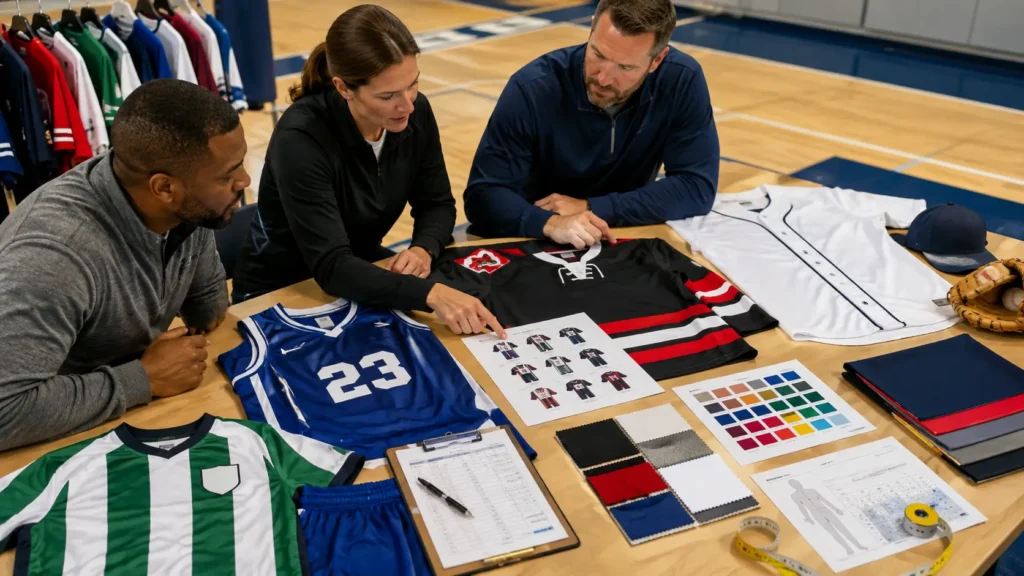
Choosing custom team uniforms sounds straightforward until you start making the actual decisions. A coach, athletic director, or team manager may need to settle on a uniform package, budget, fabric, decoration method, sizing process, colors, supplier, and delivery schedule—often while collecting information from players and parents at the same time.
The best uniform is not necessarily the most expensive one or the one with the most design options. It is the uniform that fits the way your organization plays, looks right for the team, stays within budget, and can be ordered again when another player joins three months later.
This guide walks through the decisions that matter most when choosing custom team uniforms for a school, club, league, recreational team, or competitive sports organization.
Key Takeaways
- Decide what your team actually needs before comparing uniform packages or suppliers.
- Set the budget early enough that fabric, decoration, and design choices can be made within it.
- Never assume sizing is consistent from one uniform supplier or product line to another.
- Check league or governing-body uniform requirements before approving colors, numbers, logos, or decoration.
- Ask about replacement uniforms and future reorders before placing the original order.
01
Define What Your Team Needs
Start with the sport, age group, competition level, playing conditions, and garments your players actually need.
02
Set Your Budget
Establish a realistic team or per-player budget before optional upgrades begin increasing the order price.
03
Choose Fabric & Decoration
Match the material and customization method to your sport, playing conditions, durability needs, and design.
04
Get Sizing & Fit Right
Use supplier-specific sizing information rather than assuming a player wears the same size in every brand.
05
Plan the Design
Build around team colors, readable numbers, approved logos, league requirements, and designs that can be reproduced later.
06
Compare Suppliers Carefully
Look beyond the quoted price at turnaround, sizing support, minimums, reorders, proofs, and problem resolution.
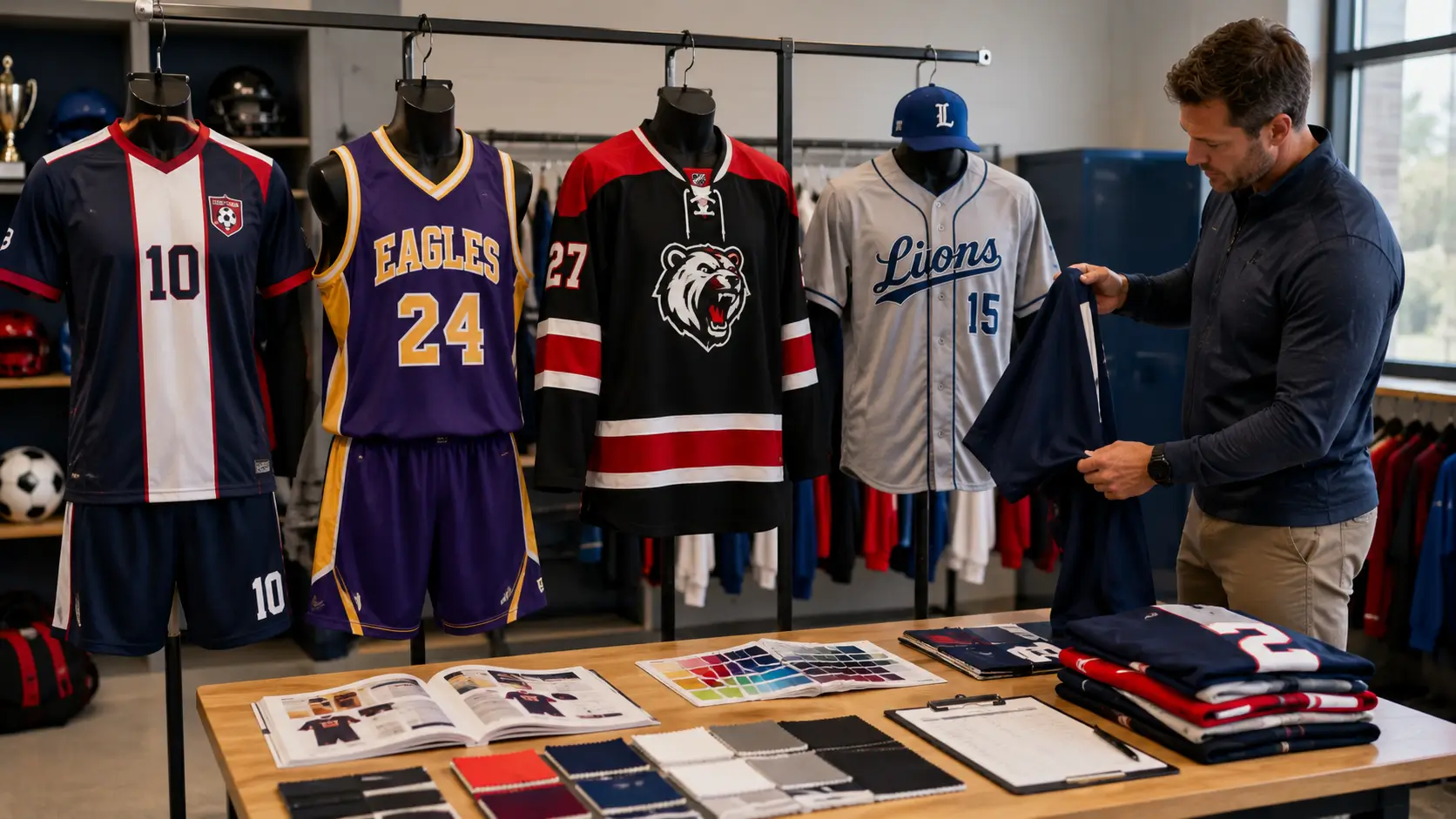 Start With What Your Organization Actually Needs
It’s easy to begin with jersey colors or a design template because those are the most visible parts of a custom uniform. And it’s more fun and interesting. But those are the wants. We need to start with the needs.
Define what the uniforms have to do.
A recreational youth soccer team playing once a week has different requirements from a travel softball club playing several games in a weekend. A high school football program needs room for protective equipment. A hockey jersey has to fit over pads. Indoor teams may put less emphasis on weather protection than teams playing outdoors through heat, rain, or cold.
Consider the players as well. Youth and adult teams may need different size ranges. Women’s and girls’ teams should not automatically be placed into a unisex garment if a suitable women’s cut is available. Competitive programs may expect several uniform combinations, while a community team may be better served by one durable game kit and a simpler practice option.
Before contacting suppliers, write down the sport, number of players, age groups, competition level, playing environment, expected season length, and how frequently the uniforms will be worn. That short description makes it much easier to compare products that serve the same purpose.
Decide What the Uniform Package Should Include
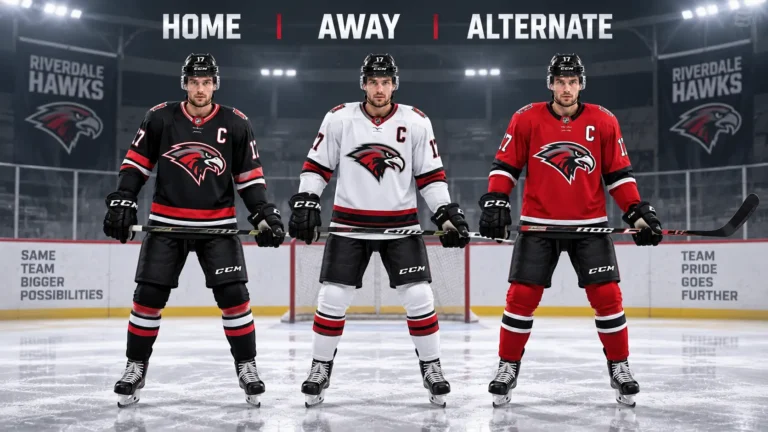
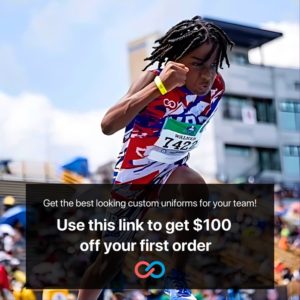 A quote for a “team uniform” can mean very different things from one organization to another. Determine the package before comparing prices. For some teams, the required uniform may be a jersey and shorts or pants. Others need socks, home and away jerseys, goalkeeper or special-position uniforms, warm-ups, practice apparel, or staff clothing. Schools and larger clubs may also want the same colors and branding carried across several teams.
Separate required items from optional items. If every player needs a jersey and shorts but a warm-up jacket is optional, price those separately. This prevents an attractive package from quietly pushing the project beyond what families or the organization intended to spend. Also decide who owns each item. A uniform that is issued by the school and reused next season may justify different fabric and durability priorities than apparel purchased by individual players and replaced annually.
Check the Rules Before You Design
Uniform requirements can vary by sport and level of competition. Before approving colors, numbers, logos, or other details, confirm the current rules used by your league, association, school district, or governing body. U.S. high school programs can consult NFHS rules publications, while college programs can use the NCAA playing rules resources for their sport.
Set the Budget Before You Start Adding Upgrades
A uniform budget works better as a buying limit than as a number calculated after the design is finished. Establish what the organization can spend in total, what families may be expected to pay, or the maximum acceptable cost per player. The garment itself is only part of the order. Names, numbers, logos, sponsor marks, decoration methods, design upgrades, extra garments, shipping, taxes or duties, and rush production can all change the final cost. Small differences become significant when multiplied across an entire roster or several teams.
Quantity matters too. Some suppliers have minimum order quantities or price breaks at certain volumes. That does not mean the lowest unit price automatically provides the best value. Ordering more garments than the program can use simply to reach a discount can cost more overall.
Leave some room in the budget for problems that are predictable even if you do not know exactly when they will occur. A late registration, damaged jersey, new player, or size correction is much easier to handle when every available dollar was not committed to the initial order. If you are still establishing the numbers, the Team Uniform Budget Guide explains the main cost categories in more detail.
You can also use the Custom Athletic Apparel Budget Calculator to work through the projected team cost before requesting quotes. Teams trying to bring costs down without simply choosing the cheapest garment can also review ways to reduce youth sports uniform costs.
Compare the Final Price, Not Just the Jersey Price
A low garment price can stop looking inexpensive once decoration, player personalization, setup charges, shipping, and other fees are added. Compare quotes using the amount your organization will actually pay for the completed order.
Choose Fabric for the Way the Team Plays
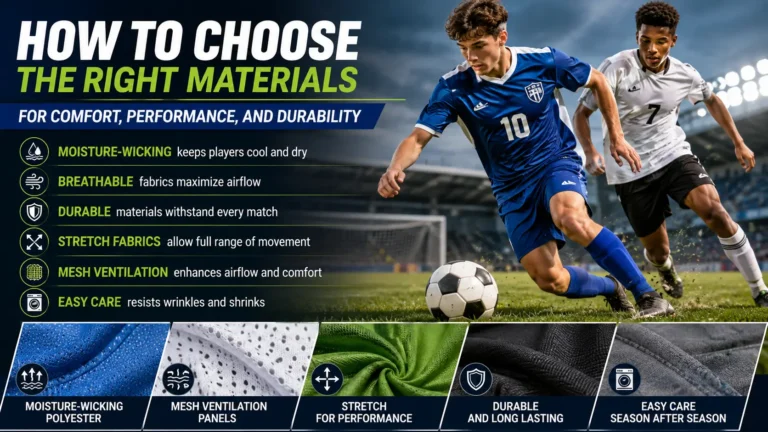
Most teams do not need to become experts in textile construction. They do need to know what they expect from the garment. For a hot-weather sport, breathability, moisture management, and low weight may sit near the top of the list. Contact sports can put more emphasis on durability and resistance to pulling or abrasion. Garments worn over protective equipment need enough room and movement for that equipment without creating unnecessary bulk.
Stretch can improve mobility, but more stretch is not automatically better. Mesh can improve ventilation in selected areas, but the lightest fabric available may not be appropriate for every sport or every part of a uniform. The right choice is a balance between comfort, performance, durability, appearance, and cost.
If suppliers use technical fabric descriptions that are difficult to compare, ask what the material is designed for rather than relying only on marketing names. What matters is how it performs under the conditions your team will actually encounter. For a more detailed recommendation based on sport and playing conditions, use the Team Uniform Fabric Selector.
Match the Decoration Method to the Uniform
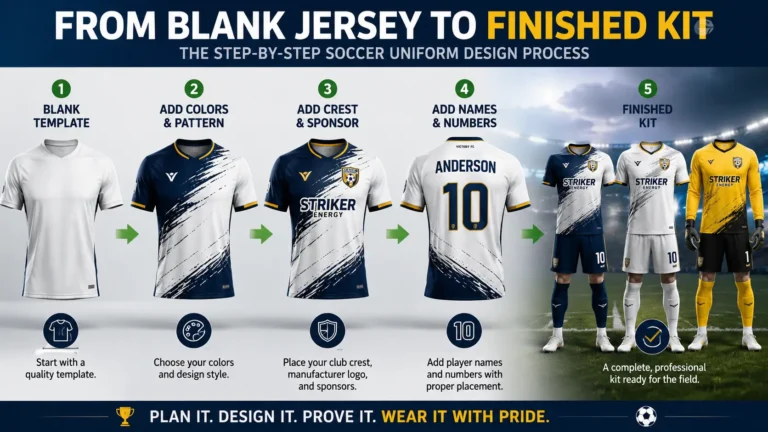
Decoration affects more than appearance. It can influence price, durability, garment feel, design flexibility, and how easily additional uniforms can be produced later.
Sublimation is commonly used when a team wants detailed, multi-color designs integrated into a synthetic garment. Screen printing can work well for simpler graphics and larger quantities. Heat-applied decoration offers another way to add numbers, names, and graphics to many athletic garments. Embroidery creates a raised stitched finish that is often well suited to logos on jackets, polos, caps, and heavier apparel, although it is not the ideal treatment for every game jersey.
Do not choose the method in isolation. Ask whether it works well with your selected fabric, how the supplier handles player names and numbers, whether there are setup charges, and what happens when you need one replacement jersey later. Our guide to team uniform decoration methods compares sublimation, screen printing, heat transfer, and embroidery in greater depth.
Get the Sizing and Fit Right Before You Order
Uniform sizing deserves its own decision rather than being treated as a final administrative step. A team can choose the right garment, fabric, colors, and design and still end up with a poor result if players receive uniforms that do not fit properly. Do not assume a player’s normal clothing size will transfer directly to a team uniform. Sizing can vary between suppliers, brands, product lines, garment styles, and cuts. Use the sizing information provided for the specific uniform being considered.
Fit requirements can also change by sport and position. Football and hockey uniforms need to accommodate protective equipment. Goalkeepers and other specialized positions may use garments with different requirements. Youth players may be growing quickly, while adult players may prefer a more consistent or position-specific fit.
Women’s and girls’ teams should also consider whether the supplier offers women’s-specific sizing and cuts rather than assuming unisex sizing is the only practical option. The objective is not to force every player into the same cut. It is to establish a sizing process that gives each athlete a suitable uniform for the way it will actually be worn. Whenever possible, ask whether the supplier provides physical sizing samples or a sample kit. Trying on the actual product is more reliable than relying only on a size label.
Do Not Collect Sizes Too Early
Choose the actual uniform product first, then collect player sizes using that product’s sizing information or samples. A roster filled with generic S, M, L, and XL selections may have to be measured again if the organization later chooses a different uniform.
Plan a Design the Team Can Actually Use
Uniform design is easier once the practical decisions are established. By this point, you should know what garments the team needs, the available budget, the fabric and decoration options, and the general fit requirements. Those decisions create useful boundaries for the design.
Start with the elements that cannot easily change. Team colors, school or club branding, league requirements, player numbers, sponsor obligations, and existing logos may determine much of the design before optional graphics are considered. Readability matters, particularly for player numbers and other information that needs to be recognized during competition.
A design can look impressive on a computer screen but perform poorly when viewed from across a field, court, rink, or gym. Consider how the design will work across the complete uniform package as well. Jerseys, shorts, pants, socks, warm-ups, goalkeeper garments, staff apparel, and alternate uniforms do not have to look identical, but they should belong to the same visual system.
Reorders should be considered before approving the design. Ask whether the supplier will retain the artwork and specifications, whether colors can be reproduced consistently, and whether the same design can be applied when one or two additional uniforms are required later.
Design for the Next Uniform Too
A good design should work for the initial roster and remain practical when the organization needs a replacement jersey, adds a player, introduces an alternate uniform, or orders another team using the same branding.
Compare Uniform Suppliers on More Than Price
Once the basic uniform requirements are defined, supplier quotes become much easier to compare. You are no longer asking several companies what they can sell you; you are asking how each company would handle essentially the same project. Start with the completed cost, but do not stop there.
Ask what is included in the quote, whether there are minimum quantities, how long production normally takes after final approval, and whether the company supplies sizing samples or garment samples. Then look ahead. Can one jersey be reordered if a player joins late? Will the same garment and colors still be available? Is there a minimum quantity for reorders? Does the supplier keep the artwork on file? These questions may seem secondary during the first purchase, but they become important as soon as the roster changes.
The proofing process also tells you something about how the company handles orders. Find out what you will be asked to approve, who is responsible for checking names and numbers, and what happens if the finished product does not match the approved proof.
Communication deserves its own consideration. A slightly lower quote loses much of its appeal if you cannot get a clear answer about sizing, delivery, artwork, or a problem with the order. Finally, read the supplier’s policies for cancellations, production changes, returns, defective products, and shipping problems before money changes hands. Custom goods frequently have different return conditions from ordinary retail apparel.
Ask This Before You Choose a Supplier
“If we need one or two more uniforms after this order is delivered, what exactly will the reorder process, minimum quantity, price, and expected turnaround be?” A clear answer now can prevent a difficult problem later.
Price surprises are another reason to compare the entire order rather than the headline figure. Our guide to hidden costs in team uniform orders shows where extra charges can appear before you commit to a supplier.
Use a Simple Framework to Keep the Purchase on Track
Choosing team uniforms gets harder when decisions are made in the wrong order. A team can spend time refining a design only to discover that it exceeds the budget, uses a decoration method that does not suit the garment, or cannot be reordered in small quantities later. A simpler approach is to work through the purchase in eight stages:
1. Define What You Need
Start with the sport, number and age of players, competition level, playing conditions, season length, and any league or organizational requirements. Decide which garments are required and which are optional before looking at packages.
2. Set the Budget
Establish the total team budget or acceptable cost per player. Include decoration, personalization, shipping, extras, and other charges rather than setting the budget from the advertised garment price alone.
3. Specify the Uniform
Choose the garment package and determine what matters most for fabric, durability, breathability, stretch, decoration, and performance. This gives suppliers a much clearer target when you begin requesting options and quotes.
4. Confirm the Sizing Process
Find out which size charts and samples will be available before committing to a product. A uniform that looks right and fits the budget can still be the wrong choice if your organization cannot confidently fit the players who will wear it.
5. Build the Design
Bring together the team colors, logos, player numbers, names, sponsor marks, and other design elements. Check readability and league requirements, and make sure the design can be reproduced if additional uniforms are needed later.
6. Compare Suppliers
Compare the completed price along with product quality, production time, sizing support, minimum quantities, proofing, communication, shipping, and reorder policies. The cheapest initial quote is not always the least expensive option over the life of the uniform.
7. Verify Before You Commit
Before approving the purchase, check the garment choices, quantities, sizes, names, numbers, colors, logos, artwork, pricing, and expected delivery. Any discrepancy is easier to correct before production begins.
8. Plan for What Happens Next
Know how the supplier handles late players, lost or damaged garments, replacement uniforms, and future reorders. Keep the final artwork, roster information, product details, and order records somewhere the organization can find them next season.
The Order of the Decisions Matters
Define the need first, then work through budget, product specifications, sizing, design, supplier comparison, and verification. Each decision narrows the next one and reduces the chance that your team will have to undo work later.
Once those choices have been made, the project changes from choosing uniforms to ordering uniforms. That next stage covers the roster, deadlines, final quantities, proofs, production, delivery, inspection, and distribution—the subjects we will handle separately in our step-by-step team uniform ordering guide.
Frequently Asked Questions About Custom Team Uniforms
How much do custom team uniforms cost?
The price depends on the sport, garment package, quantity, fabric, decoration, player personalization, design complexity, shipping, and supplier. Compare the completed per-player or team price rather than relying only on the advertised cost of the jersey.
What is the best fabric for a team uniform?
There is no single best fabric for every sport. The better choice is the fabric that provides the appropriate balance of breathability, moisture management, stretch, weight, durability, and comfort for the way the uniform will be used.
Which decoration method should a team choose?
The answer depends on the garment, design, quantities, budget, and expected use. Sublimation is particularly useful for detailed designs on compatible synthetic garments, while screen printing, heat-applied graphics, and embroidery each have situations where they make more sense.
Should everyone simply order their normal clothing size?
No. Use the size information for the specific uniform being purchased. When possible, have players try samples before the final order rather than assuming sizing is consistent between brands.
Should a team order extra uniforms?
Having a small reserve can help with late registrations, damaged garments, and other unexpected needs. The right number depends on roster stability, budget, supplier reorder minimums, and how easily individual replacements can be purchased.
Can custom uniforms usually be reordered later?
Often they can, but the conditions vary considerably. Ask about minimum quantities, pricing, product availability, artwork retention, color consistency, and turnaround before placing the first order.
What should we have ready before requesting quotes?
At minimum, know the sport, approximate number of players, garment package, budget range, desired colors, decoration requirements, size range, and the date the uniforms are required. Better information usually produces quotes that are easier to compare.
What should be checked before choosing a uniform supplier?
Review the total price, garment quality, sizing support, production lead time, proofing process, shipping, minimum quantities, reorder policies, guarantees, and how the company handles mistakes or defective products.
Choose the Uniform First. Then Plan the Order.
By this point, you should have a clearer picture of the uniform your organization needs: what is included, what it can cost, how it should fit and perform, how it will be decorated, and what you expect from the supplier.
The next stage is turning those decisions into an accurate order. That means working backward from the required delivery date, confirming the roster, collecting sizes, checking names and numbers, reviewing the proof, and making sure every detail is correct before production begins.
Now that you’ve chosen your uniform, is it time to order or not? – How to Order Team Uniforms – A Step-by Step Guide