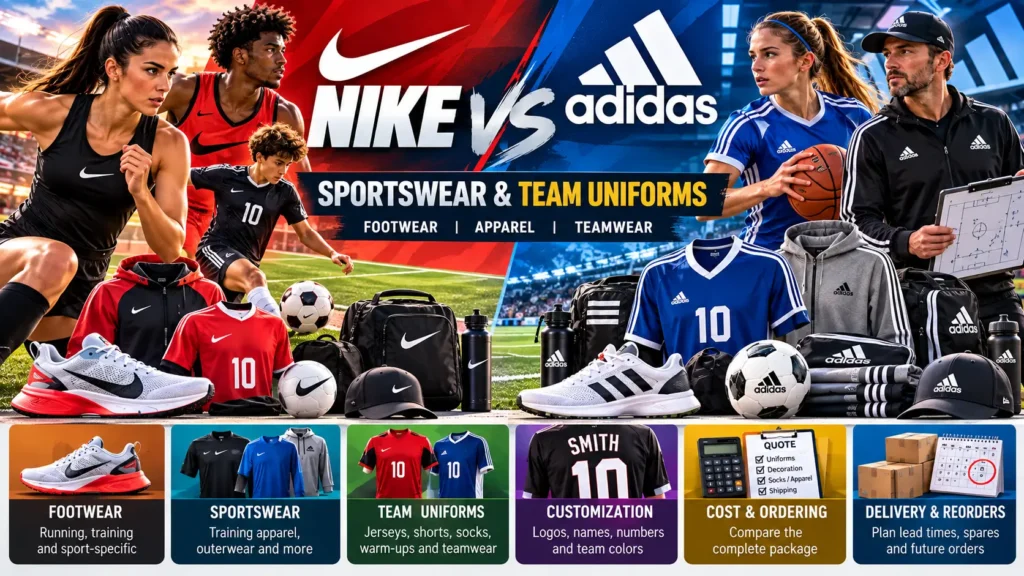
Nike and Adidas compete across athletic footwear, sportswear and team uniforms, but asking which brand is “better” skips an important question: What are you buying, and who are you buying it for?
An athlete choosing one pair of shoes has different priorities from a parent buying training clothes. A coach or team manager outfitting an entire roster has another set of concerns. Fit still matters, but so do team colors, sizing across the roster, customization, quantities, delivery dates, replacement pieces and whether matching uniforms can be reordered later.
This comparison looks at Nike and Adidas from both perspectives. We’ll compare footwear and athletic apparel, then focus on the issues that become more important when you’re buying uniforms or teamwear for an entire group.
Don’t choose between Nike and Adidas by logo alone. For footwear, compare the actual shoes for the athlete, sport and surface. For apparel, compare fit, fabric and playing conditions. For team uniforms, expand the comparison to include roster sizing, customization, complete package cost, deadlines, supplier support and future reorders.
Nike vs. Adidas: What Should You Compare?
Nike and Adidas both sell footwear, athletic apparel and sport-specific products across multiple categories. Team buyers may also encounter both brands while looking for uniforms, training apparel, warm-ups and coordinated teamwear.
That overlap can make a brand-level comparison misleading. A team isn’t buying everything Nike makes or everything Adidas makes. It is choosing a particular product or uniform program that has to meet specific requirements.
Use the comparison below to identify the questions that matter before narrowing the decision.
| What to Compare | Nike | Adidas | What to Check |
|---|---|---|---|
| Athletic Footwear | Sport-specific and performance footwear | Sport-specific and performance footwear | Sport, surface, fit, support and intended use |
| Athletic Apparel | Training, competition and sport-specific apparel | Training, competition and sport-specific apparel | Fit, fabric, movement, climate and activity |
| Team Uniforms | Availability depends on sport, product and program | Availability depends on sport, product and program | Complete package, colors, sizes and ordering requirements |
| Customization | Varies by garment and uniform program | Varies by garment and uniform program | Logos, numbers, names, colors and decoration method |
| Fit & Sizing | Check the specific garment and available cuts | Check the specific garment and available cuts | Youth, adult and women’s options required by the roster |
| Ordering | Process can vary by product and team program | Process can vary by product and team program | Who handles artwork, sizing, approvals and order changes |
| Lead Time | Depends on availability and customization | Depends on availability and customization | Confirm the current timeline for the exact order |
| Reorders | Confirm availability for the selected product | Confirm availability for the selected product | Late players, replacement pieces and future seasons |
| Budget | Compare the complete configured order | Compare the complete configured order | Use total team cost rather than one jersey price |
Build comparable orders before comparing prices. A stock jersey, decorated stock uniform and extensively customized uniform are different purchases. Include the same garments, quantities and customization in both estimates.
For a team buyer, three areas deserve particular attention: fit across the roster, the complete ordering process and what happens when another uniform is needed later.
Nike vs. Adidas for Athletic Footwear
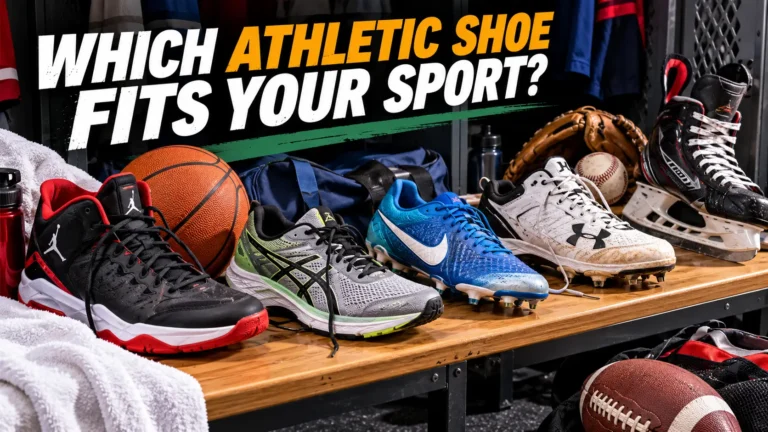
Footwear is difficult to reduce to a brand-level verdict because the comparison changes with the athlete, sport, playing surface and shoe model. A useful question is not simply “Nike or Adidas?” but which shoe fits this athlete and the activity it will be used for?
Running Shoes
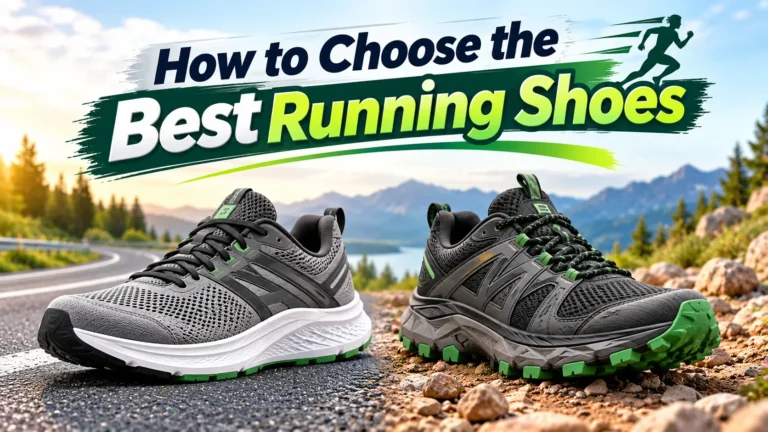
Compare running shoes according to the runner, training conditions and intended use. Cushioning, support, weight, fit and how the shoe feels through a normal stride can all affect the decision.
A Nike shoe that fits one runner well may not suit another runner’s foot shape or support needs. The same applies to Adidas—and even to different models within the same brand.
Compare specific shoes rather than assuming a brand fits the same way across its entire range.
Training and Gym Shoes
Training can involve lateral movement, strength work, short runs and repeated changes of direction. A shoe designed primarily for forward running is not automatically the right choice for those movements.
Start with the workout. Strength-focused sessions may place more emphasis on a stable platform, while circuit training and agility work can increase the importance of multidirectional traction and support.
Basketball Shoes
Basketball combines acceleration, braking, jumping, landing and rapid direction changes. Compare traction, fit, cushioning and support against the player and court conditions rather than assuming either brand has a universal advantage.
Soccer Footwear
For soccer, playing surface is a major part of the decision. Firm-ground, artificial-grass, turf and indoor footwear are intended for different conditions. Choosing an outsole that matches the surface can matter more than the logo on the shoe.
Fit also deserves particular attention because soccer footwear is often worn closer to the foot than everyday athletic shoes. Players should compare the actual boot or shoe rather than relying only on their usual sneaker size.
Use the Footwear Guides for the Detailed Decision
For a deeper footwear comparison, continue with the Running Shoe Buying Guide, Athletic Shoe Types, or Neutral Shoes vs. Stability Shoes.
Those guides are better suited to model-level footwear decisions. Here, the important point is simple: choose the shoe for the athlete and activity first, then compare brands within those requirements.
Nike vs. Adidas for Athletic Apparel
Nike and Adidas both offer training apparel, competition clothing, warm-ups, outerwear and sport-specific garments. Here again, the individual product matters more than the logo.
Before comparing garments, answer three questions: What activity is the clothing for? What conditions will it be worn in? What does the athlete need the fabric and fit to do?
Training Apparel
Training clothing should allow the athlete to move without unnecessary restriction or bulk. Depending on the activity, that may mean lightweight shirts and shorts, stretch fabrics, fitted layers or warmer garments for outdoor sessions.
Look beyond the fabric name. Seams, waistbands, sleeve construction, ventilation and stretch zones can all affect comfort during repetitive movement.
Moisture Management
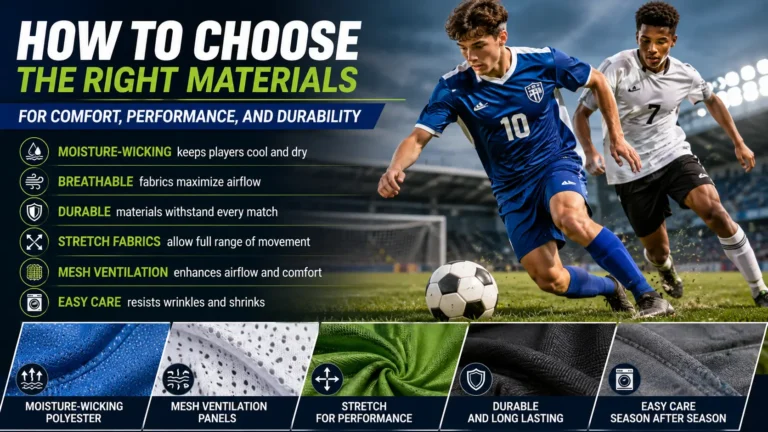
Moisture-wicking fabric can help move perspiration away from the skin, but moisture management is only one part of garment performance. Fabric weight, ventilation, construction and fit also affect comfort.
That becomes particularly important for teams. Apparel that works well for an indoor recreational league may not suit athletes competing outdoors in hot or humid conditions.
Warm-Ups and Sideline Apparel
A team may need more than its competition uniform. Jackets, pants, hoodies, training tops and coach apparel can become part of the overall package.
If those pieces are required, include them from the beginning rather than comparing game jerseys first and discovering the rest of the teamwear cost later.
Match the Fabric to the Conditions
Hot-weather apparel may benefit from lighter fabrics and ventilation. Cold-weather training can require layering and protection from wind or moisture. Indoor athletes may have fewer weather concerns but still need fabrics that handle heat and perspiration during intense activity.
The Team Uniform Fabric Selector can help narrow the fabric characteristics that make sense for your sport and playing conditions.
Fit and Sizing: A Bigger Issue When You’re Buying for a Team
Fit can determine whether an individual athlete likes a garment. For a team manager, it can determine whether an entire uniform order works.
A roster can include different heights, builds and proportions. Youth teams may also include players at different stages of growth. Men’s, women’s and youth cuts should not automatically be treated as interchangeable versions of the same garment.
Women’s Fit
When women’s cuts are available, compare them with the other options rather than automatically assigning smaller men’s or unisex sizes. The available cuts and size ranges vary by garment and product line, so check the actual uniform being considered.
Youth Sizing
Youth teams create another challenge. Buying uniforms excessively large “to grow into” can interfere with comfort and movement, while ordering too close to a player’s current measurements can leave little room for growth during a long season.
Use the sizing information for the exact garment being ordered. Don’t assume a medium in one Nike or Adidas product will fit like a medium in another.
Don’t collect the roster using only “S, M, L” based on what players normally wear. Record each player’s size against the actual garment or sizing chart being ordered.
Nike vs. Adidas for Team Uniforms and Teamwear
This is where the comparison changes most. Buying branded athletic clothing for yourself is one transaction. Outfitting an entire roster is a project.
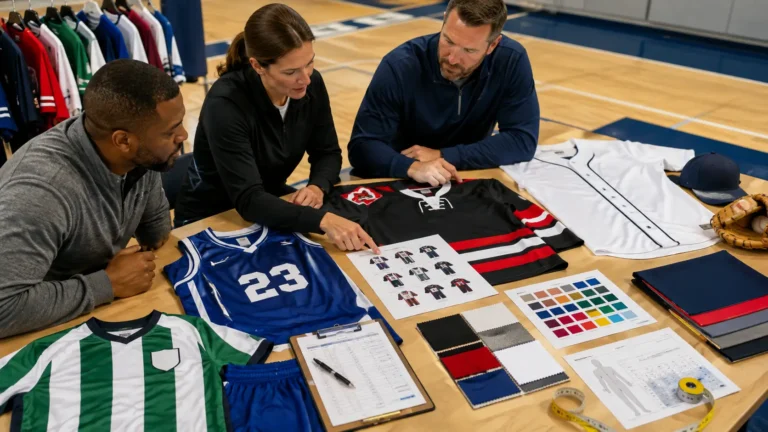
A team may need jerseys, shorts or pants, socks, goalkeeper or specialty garments, warm-ups, coach apparel and spare pieces. Names, numbers and logos may need to be added. Sizes must be collected, artwork approved and deadlines met. Someone also needs a plan for late registrations and replacement uniforms.
Stock vs. Customized Uniforms
Determine whether the team is considering a stock program, a configurable uniform program or a more extensively customized product.
Those choices can affect design flexibility, minimum quantities, production time, price and reorder options. The exact purchasing process can also vary by sport, product, market and the company handling the order.
Customization
Uniform customization can include player numbers, names, team logos, sponsor marks and other design elements. Decoration methods can also differ.
Sublimation, embroidery and screen printing produce different results and suit different garments, designs and budgets.
Don’t stop at asking whether customization is available. Find out what can be customized, how it will be applied, what it adds to the price and whether matching replacements can be produced later.
Start With the Team’s Requirements
Before selecting either brand, document what the team actually needs. The Custom Team Uniform Buying Guide & Resource Center brings the planning process and uniform-ordering tools together in one place.
Soccer teams can use the Custom Soccer Uniform Resource Center for sport-specific planning, sizing, design and ordering guidance.
If roster and package quantities are still unclear, use the Team Uniform Quantity Calculator before comparing final uniform packages.
Don’t Compare the Jersey Price Alone
A jersey price is easy to compare. A complete team order is not.
A lower starting price can become less meaningful once shorts or pants, socks, player numbers, names, logos and other customization are added. Teams may also need goalkeeper or specialty garments, warm-ups, coach apparel and spare uniforms.
The more useful number is the cost of outfitting the roster the way the team actually intends to order it.
Build the Complete Package First
Define the package before comparing Nike and Adidas pricing. A soccer team, for example, may need home and away jerseys, shorts and socks for field players, separate goalkeeper garments and spare pieces.
A basketball team may have a smaller game package but add warm-ups or travel apparel. Other sports introduce their own uniform components and fit requirements.
Once the roster is included, even a modest per-player price difference can become meaningful.
Calculate both cost per player and total team cost. Include customization, spare garments and required teamwear before comparing the final numbers.
The Custom Athletic Apparel Budget Calculator can help test different roster and package decisions before the order is finalized.
Availability, Lead Times and Reorders
A uniform can meet the team’s design requirements and still create a problem if the completed order cannot arrive when it is needed.
Lead time can be affected by stock availability, customization, production, order size, artwork approval and shipping. Confirm the timeline for the specific uniform and ordering program rather than relying on a general estimate associated with either brand.
Stock and Custom Orders Can Follow Different Timelines
A stock garment that already exists in the required colors and sizes may follow a different ordering process from a uniform that has to be produced or extensively customized.
Ask when the completed order is expected after artwork, roster information and other required approvals are final.
Plan for the Second Order Before Placing the First
The first order is only part of the uniform’s life cycle. Players join late. Jerseys get damaged or lost. Sizes change. An organization may want to use the same design again next season.
Before approving the uniform, find out whether individual replacement pieces can be reordered, whether a fill-in order has minimum quantities, and how long the selected style and color are expected to remain available.
Also ask whether the supplier can reproduce the original decoration and what alternatives are available if the original garment becomes a discontinued style.
When the budget and risk justify it, a few carefully selected spare pieces can be easier to manage than an emergency reorder shortly before a tournament or important game.
The Team Uniform Quantity Calculator includes spare-uniform planning so those quantities can be considered before the first order is submitted.
Nike vs. Adidas: Compare the Order Your Team Will Actually Place
Use the same requirements for both options. The goal is to compare two realistic team orders rather than two logos or two starting jersey prices.
Ready to Compare
When these requirements are documented for both options, compare the actual Nike and Adidas packages available to your team.
Match the Brand to the Requirements
At this point, the comparison should be narrower than “Nike or Adidas?” You should be looking at specific products, programs and suppliers that can meet the requirements you’ve documented.
When a Nike Option Fits the Requirements
A Nike option remains in consideration when the specific product fits the athletes, required sizes and colors are available, and the complete order can meet the team’s customization, budget, deadline and reorder requirements.
When an Adidas Option Fits the Requirements
Apply the same test to Adidas. Keep the option in consideration when the specific product and ordering arrangement meet the team’s fit, design, package, budget, timing and future-order requirements.
When the Brand Shouldn’t Come First
A team with a tight deadline, unusual sizing requirements, a small order, extensive customization or a strict budget may need to identify suitable suppliers and uniform programs first, then compare the brands available through those options.
The same applies when an organization needs services beyond the uniform itself, such as a team store, individual player ordering or ongoing roster support.
Brand vs. Supplier: Don’t Confuse the Two
This distinction matters when you’re buying for a team. Nike or Adidas may provide the product, but another company may help the team select, customize and order it.
A dealer or supplier may handle product selection, sizing questions, artwork, ordering and delivery. A decorator may handle some or all of the customization.
Sometimes one company performs several of these roles. The important point is that choosing the brand does not automatically determine the entire ordering experience.
Evaluate the company handling the order as carefully as the uniform itself. Communication, artwork approval, sizing support, delivery assistance and reorder service become important once the team has committed money to the purchase.
How a Team Uniform Order Reaches the Athlete
A simplified buying chain may look like this:
- Brand or manufacturer — provides the garment or uniform program.
- Supplier or dealer — helps the team select, configure and order the product.
- Decorator or production system — produces or applies team colors, logos, names and numbers.
- Team manager — coordinates roster information, approvals, quantities and distribution.
- Athlete — receives the finished uniform or apparel.
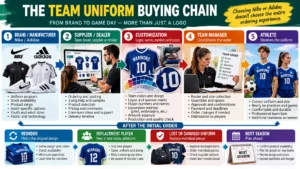
The exact chain varies. What matters is knowing who is responsible for each stage before the order is placed.
This is why the Preferred Sports Wear Brands section separates brand comparisons from supplier reviews. A brand comparison helps evaluate the products and programs. A supplier review examines the company responsible for helping the team complete the purchase.
Nike vs. Adidas by Buyer Type
Individual Athlete
Start with the specific product. For footwear, concentrate on fit, sport, surface and intended use. For apparel, compare fit, fabric, comfort and playing conditions.
Parent Buying for One Player
Fit, durability, price and the requirements established by the team or league usually come first. If an exact uniform or approved product has been specified, confirm those requirements before buying an alternative independently.
Coach or Team Manager
The decision extends across the roster. Sizes, quantities, customization, deadlines, spares, budget and future reorders all become part of the comparison.
The Custom Team Uniform Buying Guide & Resource Center is the better starting point when you’re responsible for organizing the complete order.
School, Club or Athletic Organization
Larger organizations may also need consistency across multiple teams, age groups or seasons. Approved colors and branding, purchasing procedures, replacement cycles and long-term product availability can become more important as the program grows.
At that point, the decision is less about a simple brand comparison and more about finding the right combination of product, uniform program, supplier and service.
Make the Comparison From Your Requirements
Nike and Adidas compete across footwear, athletic apparel and team sports, but those categories involve different buying decisions.
For footwear, compare the actual shoes against the athlete’s sport, surface, fit and intended use. For sportswear, compare the garment’s fabric, construction, fit and playing conditions.
For team uniforms, document the complete requirements before comparing the available options. That includes roster sizes, required garments, team colors, customization, quantities, total budget, deadline, spare pieces and future reorders.
Then compare equivalent Nike and Adidas options against the same requirements. This makes differences in price, availability, fit or ordering support easier to see without allowing the brand name to substitute for the buying decision.
Continue With the Right PSW Resource
If you’re organizing a team order, continue with the Custom Team Uniform Buying Guide & Resource Center. Soccer teams can move directly to the Custom Soccer Uniform Resource Center.
The Tools & Resources area includes the Team Uniform Quantity Calculator, Fabric Selector, Budget Calculator and other planning resources that can help turn the requirements in this article into an actual order plan.
Nike vs. Adidas FAQ
Is Nike or Adidas better for team uniforms?
There isn’t one answer that applies to every team. Compare the specific uniform options available for your sport against the team’s required sizes, colors, customization, total cost, deadline, supplier support and reorder needs.
What should a soccer team compare between Nike and Adidas?
Compare the complete kit rather than the jersey alone. Check field-player and goalkeeper garments, required sizes, team colors, customization, quantities, total cost, delivery schedule and replacement options. Soccer footwear should be evaluated separately according to the player’s fit and playing surface.
Do Nike and Adidas have youth team uniform options?
Youth availability depends on the sport, garment and product line being considered. Check the exact size range for the uniform rather than assuming every adult product has a corresponding youth version.
Can team uniforms be customized with logos and player numbers?
Customization depends on the garment and ordering program. Before ordering, confirm which logos, names, numbers, colors and sponsor marks can be produced, how they will be applied and whether the same decoration can be reproduced on later orders.
Which costs less for a team, Nike or Adidas?
Starting garment prices don’t provide a complete comparison. Build equivalent packages using the same quantities and customization, then compare cost per player and total team cost.
Should a team choose the brand before choosing a supplier?
Not necessarily. If the team has strict requirements for sizing, customization, quantities, budget, delivery or future reorders, identifying suppliers and uniform programs capable of meeting those requirements can narrow the available brand choices.
What should a team compare besides price?
Compare fit, size range, fabric, required garments, colors, customization, quantities, deadline, supplier support, spare garments and future reorder availability.