Best Soccer Uniform Fabrics for
Games, Practices, and Tournaments
Most coaches naturally focus on colors, logos, and designs when choosing custom soccer uniforms. But what the uniform is made from can have just as much effect on players as what it looks like.
Soccer players sprint, change direction, tackle, jump, and compete in everything from cool spring weather to hot summer tournaments. A great-looking jersey made from the wrong material can become hot, heavy, and uncomfortable as the match goes on.
Fortunately, modern performance fabrics give teams plenty of options. The key is knowing which characteristics matter and which fabric specifications to ask about before placing an order.
✔️ Key Takeaways
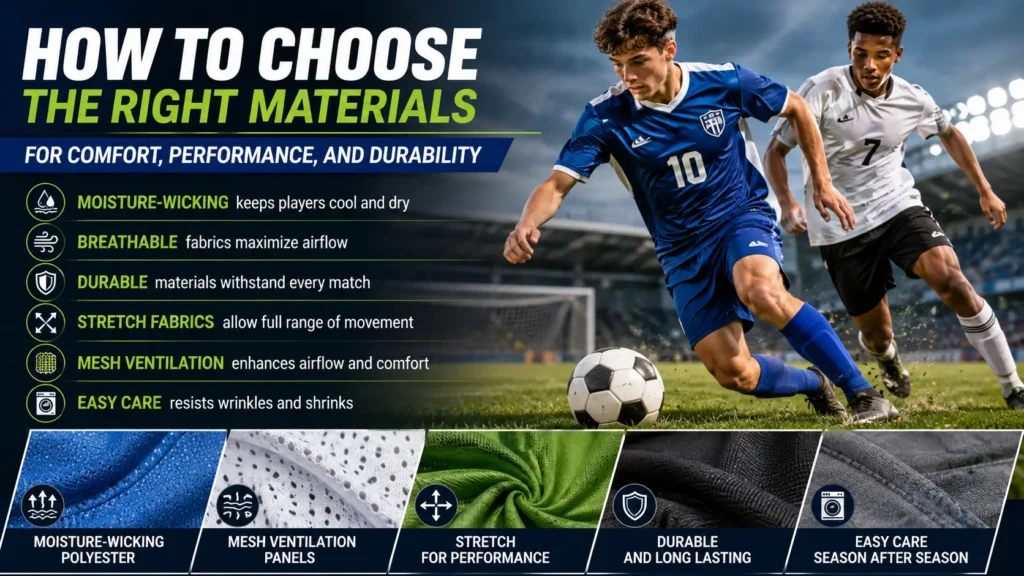
- Moisture-wicking performance polyester is the standard choice for most modern soccer uniforms.
- Cotton is generally unsuitable for competitive match jerseys because it absorbs moisture and takes longer to dry.
- Midweight polyester around 150–170 GSM provides a practical balance of comfort, durability, and coverage for many teams.
- Mesh ventilation panels can improve airflow during warm-weather matches and tournament play.
- Stretch fabrics can provide greater freedom of movement and a closer athletic fit.
- Shorts and socks should be evaluated for durability and comfort along with the jersey.
- Ask for fabric specifications and, when possible, request a sample before placing a large team order.
At A Glance
01
Choose the Right Fabric
Performance polyester offers the moisture management, quick drying, durability, and easy care most soccer teams need.
02
Understand Fabric Weight
Lightweight, midweight, and heavyweight fabrics feel different and perform differently depending on climate and intended use.
03
Improve Ventilation
Mesh panels placed under the arms, along the sides, across the upper back, and around the shoulders can increase airflow.
04
Consider Stretch and Fit
Polyester blended with elastane or spandex can provide greater flexibility and recovery for players who prefer a more athletic fit.
05
Check the Whole Uniform
Shorts and socks need enough durability, elasticity, and comfort to handle practices, games, and repeated washing.
06
Know What to Ask Your Supplier
Fabric composition, GSM, ventilation, stretch options, samples, and care instructions should all be confirmed before ordering.
Why Fabric Choice Matters on the Field
Soccer uniforms have a demanding job. Players are constantly sprinting, changing direction, tackling, jumping, and moving through different weather conditions.
The right fabric helps move moisture away from the skin, dries quickly, allows airflow, and stands up to regular use. The wrong material can absorb sweat, trap heat, stretch out, or wear prematurely.
When comparing uniform suppliers, don’t evaluate only the design and price. Ask about fabric specifications with the same attention you give colors, logos, sizing, and decoration.
Why Cotton Isn’t Recommended for Match Jerseys
Cotton was once common in sportswear, but it is rarely used for competitive soccer jerseys today.
The main problem is moisture. Cotton absorbs perspiration instead of moving it away from the body. As the fabric gets wet, it becomes heavier, takes longer to dry, and can cling to the player’s skin.
Cotton or cotton-blend shirts can still work for casual team apparel or inexpensive practice shirts. For competitive match uniforms, however, performance polyester is generally the more practical choice.
Moisture-Wicking Polyester: The Standard Choice
Most modern soccer jerseys are made from 100% performance polyester or polyester-based performance blends.
Moisture-wicking polyester is designed to move perspiration away from the player’s skin toward the outer surface of the fabric, where it can evaporate more quickly.
Its main advantages include:
- Lightweight construction that doesn’t unnecessarily weigh players down.
- Quick drying during games, practices, and tournament weekends.
- Good breathability for improved comfort.
- Durability through regular play and repeated washing.
- Resistance to shrinking and wrinkling compared with many natural fabrics.
- Easy care throughout the season.
Manufacturers may use terms such as performance polyester, dry-fit, moisture management, or similar descriptions. Don’t rely on the marketing name alone. Ask what the fabric is actually made from and how it is constructed.
Understanding Soccer Jersey Fabric Weight
Not all polyester jerseys feel the same. One useful specification for comparing them is fabric weight, normally expressed in grams per square metre, or GSM.
GSM tells you how much the fabric weighs, but heavier does not automatically mean better. The appropriate weight depends on climate, intended use, durability requirements, and the feel your players prefer.
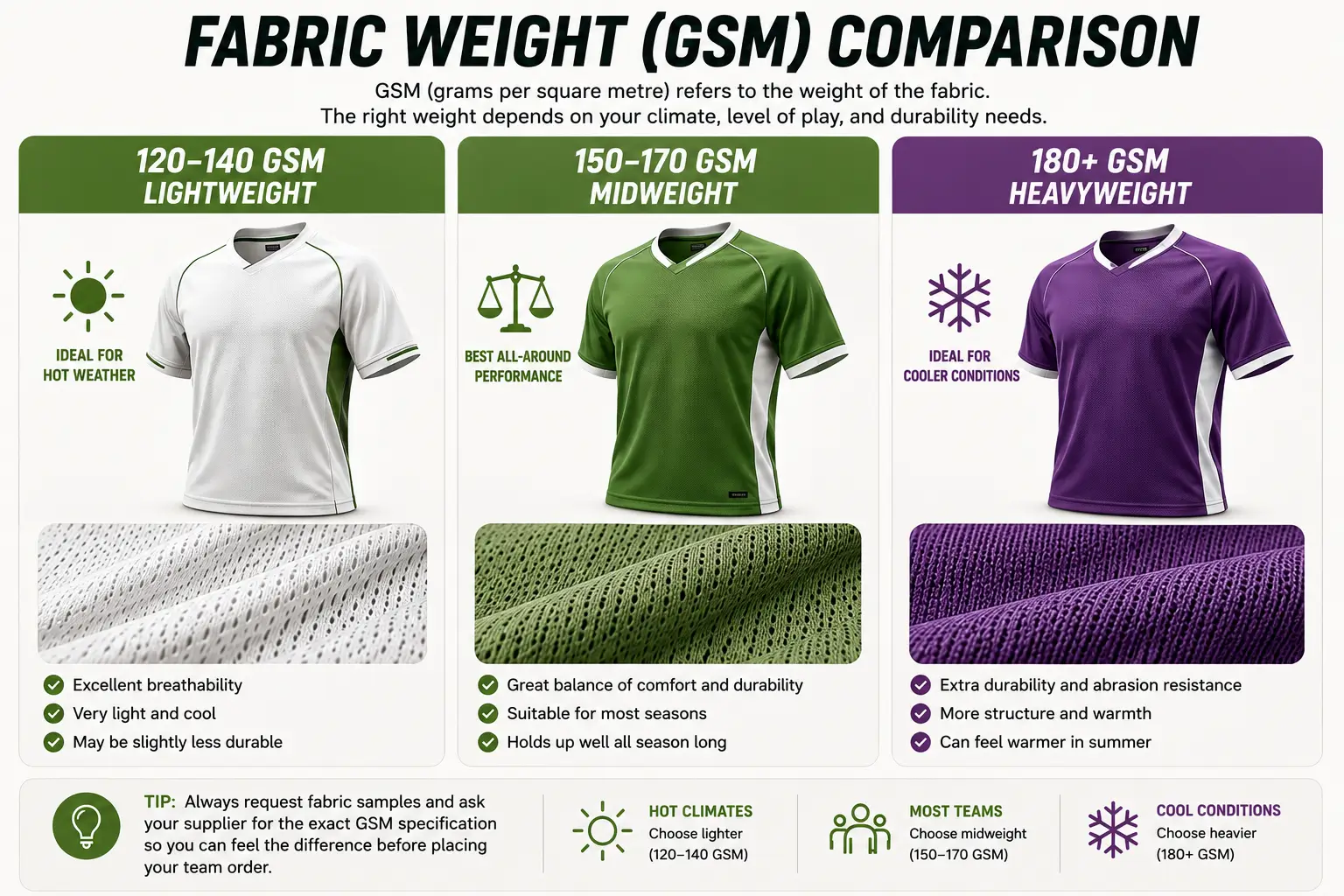
120–140 GSM: Lightweight
Lightweight jerseys maximize airflow and can work well for summer leagues, tournaments, and teams playing regularly in hot conditions.
The tradeoff is that very light fabrics may provide less durability than heavier materials. Light-colored jerseys, particularly white ones, should also be checked for adequate coverage before ordering an entire team set.
150–170 GSM: Midweight
For many youth clubs, schools, and competitive teams, this range provides a practical middle ground.
Midweight polyester offers a useful balance between breathability, durability, coverage, and comfort without making the jersey unnecessarily heavy. For teams that play across different weather conditions, this is often a sensible place to start.
180+ GSM: Heavyweight
Heavier fabrics provide more structure and may offer additional durability, but they can also feel warmer.
They are less common for standard outfield jerseys but may make sense for some goalkeeper garments, cold-weather training tops, or situations where additional durability matters more than maximum airflow.
✔️ Key Takeaway
GSM is useful when comparing jersey fabrics, but it should not be the only specification you consider. Moisture management, ventilation, stretch, coverage, and durability all affect how the finished uniform performs.
Mesh Panels Can Improve Ventilation
Moisture-wicking fabric helps manage perspiration, but players also need airflow.
Many modern soccer jerseys use strategically positioned mesh panels in areas where heat tends to accumulate. Instead of making the entire jersey extremely lightweight, manufacturers can use more breathable material in specific locations.
Common ventilation zones include:
- Under the arms.
- Along the side panels.
- Across the upper back.
- Around the shoulders.
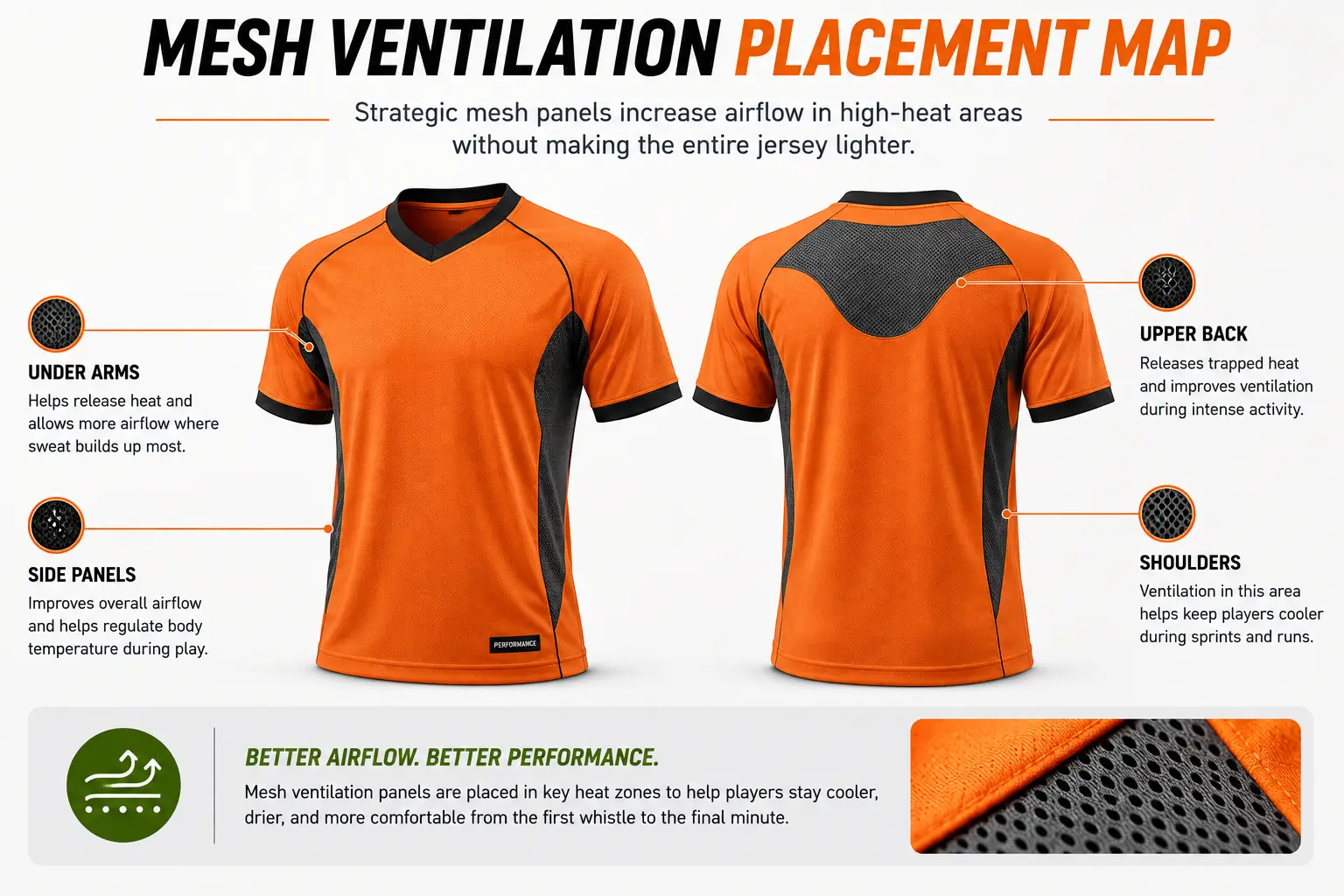
For teams playing summer tournaments or several matches in a short period, these ventilation zones can improve comfort without making the entire jersey lighter.
When reviewing supplier specifications, look for terms such as micro-mesh and pinhole mesh, but ask where the mesh is actually positioned and whether you can see a sample.
Stretch Fabrics Give Players More Freedom of Movement
Soccer involves constant sprinting, turning, reaching, jumping, and changes of direction. Some performance uniforms therefore incorporate a small percentage of elastane or spandex into the fabric.
These fibers provide additional stretch and recovery, allowing the garment to move with the player and then return more closely to its original shape.
Stretch fabrics can be particularly useful for players who prefer a closer athletic fit rather than a loose traditional jersey. They can also improve comfort for female athletes when combined with a garment cut designed for their fit requirements.
Stretch isn’t necessary for every team. Compare it with standard performance polyester and decide whether the additional flexibility provides enough benefit for your players and budget.
Don’t Forget About Shorts and Socks
Jerseys receive most of the attention during uniform selection, but they are only one part of the kit.
Soccer shorts need enough durability to handle sliding, regular washing, training, and match play while remaining lightweight and comfortable. Some manufacturers use a slightly heavier polyester construction for shorts to provide greater abrasion resistance.
Soccer socks commonly combine polyester, nylon, and spandex. The goal is a fabric that remains comfortable, retains its elasticity, and helps keep shin guards secure throughout the match.
When requesting uniform samples, examine the entire kit rather than judging quality from the jersey alone.
Match the Fabric to Your Playing Conditions
There isn’t one perfect fabric specification for every soccer team. Where, when, and how often your players compete should influence the decision.
- Hot climates: Consider lightweight moisture-wicking polyester with additional mesh ventilation.
- Moderate climates: Midweight performance polyester provides a practical balance for many teams.
- Cool weather: Midweight jerseys combined with appropriate base layers may provide more flexibility than choosing an unnecessarily heavy match jersey.
- Tournament play: Prioritize quick-drying materials when players may compete in several matches over a weekend.
Teams playing across several seasons should generally look for a versatile fabric rather than optimizing the uniform for one weather extreme.
Six Fabric Questions to Ask Before Ordering
A supplier should be able to provide more information than simply telling you that a jersey uses “performance fabric.”
Before approving an order, ask:
- What is the exact fabric composition?
- What is the jersey fabric weight in GSM?
- Are mesh ventilation panels available, and where are they located?
- Do you offer stretch fabric options?
- Can we receive fabric swatches or sample garments before ordering?
- What washing and care instructions do you recommend?
A physical sample can answer questions that specifications and product photographs cannot. Feel the material, stretch it, hold lighter colors up to the light, inspect the stitching, and compare it with uniforms your players already use.
A Practical Starting Point for Most Soccer Teams
For many youth clubs and competitive teams, a 150–170 GSM moisture-wicking polyester jersey with strategically placed mesh ventilation is a sensible starting point. It provides a useful balance of comfort, durability, breathability, and coverage for practices, league matches, and tournament play.
That doesn’t mean every team should order the same fabric. Climate, playing schedule, fit preferences, budget, and supplier options still matter. Use the GSM specification to narrow your choices, compare the construction and ventilation features, and request samples before approving a large order.
Once you’ve selected the right fabric, the next decision is how your team identity will be applied to it. Compare the available uniform decoration methods before choosing how to add your logos, names, and numbers.