How To Choose The Right Athletic Wear For Your Next Workout
The right workout clothing should help you move comfortably, manage heat and perspiration, and stay focused on your activity. Clothing that becomes heavy, traps heat, restricts movement, or needs constant adjustment can quickly become a distraction.
Different workouts also place different demands on athletic apparel. A runner may prioritize lightweight fabrics and moisture control, while someone lifting weights may need clothing that stays in place during squats, presses, and other compound movements. Outdoor athletes must also consider temperature, wind, rain, visibility, and changing weather conditions.
This guide explains how to choose athletic wear based on your workout, preferred fit, training environment, and personal comfort. It also covers athletic fabrics, layering, workout accessories, garment care, common buying mistakes, and considerations for teams and organizations.
✔️ Key Takeaways
- Choose athletic clothing that matches the movements and demands of your workout.
- Moisture-wicking, breathable, and stretch fabrics can improve comfort during exercise.
- Workout clothes should allow unrestricted movement without feeling excessively tight or loose.
- Layering makes it easier to adjust to changing temperatures and outdoor conditions.
- Proper washing and drying can help performance apparel maintain its fit and function.
- Comfort, fabric, fit, and intended use should matter more than trends or brand names.
At A Glance
Match Clothing to Your Workout
Running, strength training, cycling, yoga, and team practices require different combinations of support, mobility, and moisture control.
Understand Athletic Fabrics
Polyester, nylon, cotton, elastane, and performance blends each provide different levels of softness, stretch, durability, and moisture management.
Find the Right Fit
Loose, fitted, and compression clothing can all work well when the garment allows natural movement and remains comfortable.
Dress for the Conditions
Temperature, humidity, wind, rain, and sunlight should influence your fabrics, layers, colors, and outerwear.
Protect Your Athletic Wear
Prompt washing, appropriate water temperatures, lower dryer heat, and proper storage can extend the life of workout clothing.
Avoid Buying Mistakes
Do not choose athletic wear based only on appearance, price, or brand recognition. Consider how and where it will be used.
The Link Between Wearing the Right Athletic Apparel and Performance Levels
It goes without saying that the more you exercise the more your body temperature increases. As that happens, perspiration increases the more you move. Clothing that traps heat, restricts mobility, rubs against your skin, or starts getting heavy with moisture can start getting uncomfortable pretty quick.
Modern sportswear is designed to address many of these problems. Lightweight fabrics help reduce heat buildup, moisture-wicking materials move perspiration away from the skin, and stretch construction allows clothing to move more naturally with the body.
Comfort does not improve fitness by itself, but comfortable clothing makes it easier to concentrate on the workout instead of adjusting a waistband, pulling down a shirt, or dealing with wet fabric. This is one reason athletes at every level, from recreational fitness enthusiasts to professional competitors, use clothing designed specifically for physical activity.
Choosing Athletic Wear for Seven Different Workouts
Not every workout requires the same clothing. Selecting the right clothing based on your activity level usually gets you better better results than wearing the same outfit for every type of exercise.
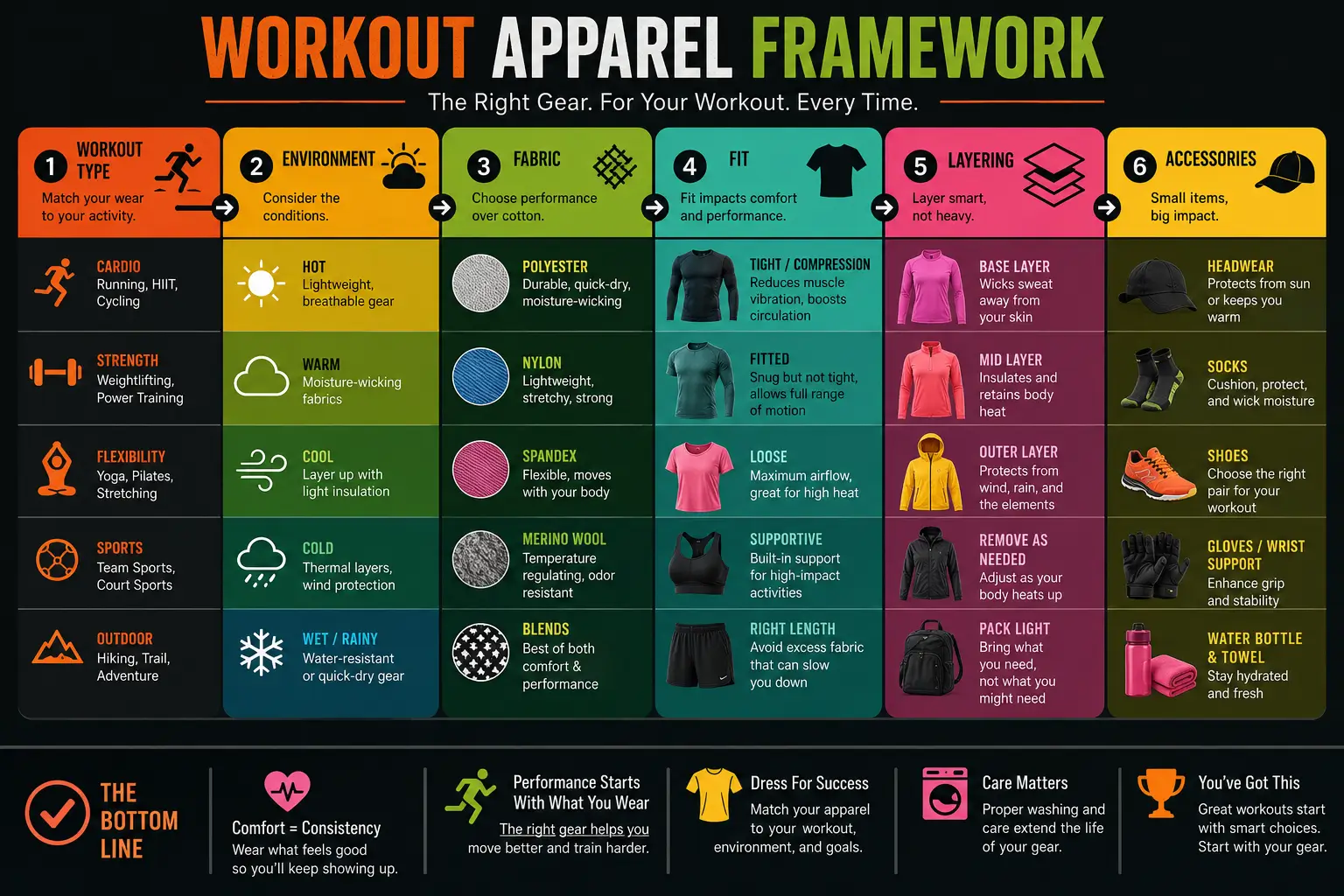
- Running – Running apparel should prioritize lightweight fabrics, moisture management, and unrestricted movement. Performance shirts, running shorts, supportive sports bras where appropriate, and technical running socks can all contribute to greater comfort during longer runs.Outdoor runners should also consider visibility when training near traffic, especially during early morning, evening, or low-light conditions. Reflective details and brighter outer layers can make runners easier for drivers and cyclists to see.
- Strength Training – Weight training requires clothing that allows unrestricted movement without becoming a distraction. Many people prefer moisture-wicking shirts combined with shorts, leggings, or athletic pants that remain comfortable during squats, lunges, presses, deadlifts, and other compound exercises.Garments that are excessively loose may interfere with equipment or obscure body position, while clothing that is too tight can restrict movement. Secure waistbands and flexible materials are particularly useful during lower-body exercises.
- High-Intensity Interval Training (HIIT) – High-intensity interval training often includes rapid movement, jumping, sprinting, floor exercises, and frequent changes in direction. Breathable fabrics, secure waistbands, supportive garments, and clothing that remains in place during dynamic movement become especially important.HIIT participants may also prefer clothing with minimal excess fabric to reduce distraction during burpees, mountain climbers, box jumps, and similar exercises.
- Yoga and Stretching – Yoga and stretching apparel should provide flexibility while remaining comfortable through a full range of motion. Stretch fabrics, smooth waistbands, and flat seams can help reduce irritation during floor exercises and extended stretching sessions. Clothing should remain secure during bending, twisting, and inverted positions without feeling restrictive.
- Cycling – Cycling clothing often focuses on moisture management, streamlined fit, and comfort during extended periods in the riding position. Depending on the distance and riding style, specialized cycling shorts, jerseys, gloves, and padded garments may provide additional comfort. Outdoor cyclists should also consider visibility, temperature changes, wind resistance, and the ability to carry or remove lightweight layers.
- Walking and Hiking – Walking and hiking apparel should provide comfort over extended periods while accounting for weather, terrain, and elevation changes. Breathable shirts, flexible pants or shorts, performance socks, and lightweight outer layers can help reduce discomfort. Hikers may also need durable fabrics that resist abrasion from branches, rocks, backpacks, and repeated outdoor use.
- Team Training – Many schools, clubs, and recreational sports teams wear coordinated training apparel during practices and conditioning sessions. Moisture-wicking shirts, lightweight shorts, warm-up pants, jackets, and hoodies can create a more professional appearance while supporting athletic performance.Teams should choose garments that can accommodate different body types, training conditions, and seasonal requirements. Consistent colors and decoration also make future reorders easier.
The Six Types of Athletic Fabrics that Boost Performance
One of the biggest differences between everyday clothing and athletic wear is the fabric itself. Modern performance materials are designed to provide different combinations of moisture control, stretch, breathability, durability, and comfort.
- Polyester – Polyester remains one of the most common fabrics used in athletic apparel. It is lightweight, durable, and widely used in moisture-wicking garments designed for sports and fitness activities.Many team jerseys, training shirts, shorts, and performance garments use polyester because it dries relatively quickly and works with several common decoration methods. Polyester garments can vary considerably in quality. Fabric weight, weave, ventilation panels, finishing treatments, and garment construction all affect how the material feels and performs.
- Nylon – Nylon is valued for its strength, flexibility, smooth texture, and resistance to abrasion. It is often blended with other fibers to improve durability while maintaining comfort. Nylon is commonly found in leggings, fitted tops, shorts, jackets, outer layers, and garments intended for repeated movement.
- Spandex and Elastane – Spandex and elastane are different names commonly used for stretch fibers that allow clothing to move naturally with the body. These materials are frequently blended into leggings, compression garments, fitted shirts, training shorts, sports bras, and cycling apparel.A relatively small percentage of stretch fiber can make a noticeable difference in flexibility and garment recovery. This helps clothing return to its original shape after repeated movement.
- Cotton – Cotton remains popular because of its softness, familiarity, and comfort. However, it generally absorbs and retains more moisture than technical performance fabrics, making it less suitable for high-intensity exercise or prolonged outdoor activity.For walking, stretching, light strength training, or casual workouts, cotton can still be a comfortable choice. The best option depends on workout intensity, personal preference, and the amount of perspiration produced.
- Performance Blends – Many manufacturers combine polyester, cotton, nylon, rayon, and stretch fibers to create fabrics that balance softness, durability, breathability, flexibility, and moisture management. Blended fabrics are particularly common in premium athletic apparel because they can provide the comfort of natural fibers with some of the performance advantages of synthetic materials.
- Mesh and Ventilated Fabrics – Mesh panels and ventilated fabric zones are often added to areas where heat and perspiration tend to build up. Common locations include the upper back, underarms, sides, and behind the knees. Ventilation can improve airflow, although the overall comfort of the garment still depends on its fit, fabric weight, and construction.
Top 4 Ways to Finding the Right Fit
The best athletic clothing allows natural movement without becoming distracting during exercise. Fit should be evaluated in relation to the activity rather than by appearance alone.
- Loose Fit – Loose-fitting garments can provide airflow and comfort for walking, hiking, casual fitness, recreational sports, and some strength-training activities. However, excessively loose clothing may catch on equipment, shift during floor exercises, or interfere with rapid movement. Loose should still mean controlled and comfortable rather than oversized and unstable.
- Fitted Apparel – Fitted garments reduce excess fabric and remain closer to the body during movement. Many runners, cyclists, fitness-class participants, and competitive athletes prefer this style because it minimizes distraction. Fitted clothing should follow the body without cutting into the skin, limiting circulation, or restricting the range of motion.
- Compression Clothing – Compression garments fit closely against the body and provide a secure, supportive feeling. Some athletes prefer compression shorts, leggings, sleeves, socks, or shirts during training and recovery. Compression clothing should feel firm but not painful, numb, or restrictive. Personal preference varies, and not every athlete benefits from wearing the same level of compression.
- Check the Fit While Moving – A garment may feel comfortable while standing still but become restrictive during exercise. Before choosing athletic clothing, test movements that resemble the intended workout. Try squatting, reaching overhead, bending, lunging, twisting, or sitting in a cycling position.Check whether the clothing rides up, slides down, pulls across the shoulders, or restricts movement. The most important consideration is comfort. Athletic wear should allow unrestricted movement throughout the entire workout.
How to Layer Athletic Wear
Layering allows athletes to adjust their clothing as body temperature and weather conditions change. Instead of relying on one heavy garment, several lighter layers can provide more control.
- Base Layer – The base layer sits closest to the skin. Its primary purpose is to move moisture away from the body and help reduce the discomfort caused by damp clothing. Performance shirts, fitted long-sleeve tops, compression garments, and technical thermal layers are common base-layer options.
- Insulating Layer – The middle layer helps retain warmth. Lightweight fleece, quarter-zips, training tops, hoodies, and insulated athletic garments can serve this purpose. The amount of insulation required depends on temperature, wind, workout intensity, and personal tolerance for cold conditions.
- Outer Layer – The outer layer provides protection from wind, light rain, or snow. Athletic shells and lightweight jackets should provide weather resistance without trapping excessive heat. Packable outer layers can be useful for runners, cyclists, hikers, and teams because they can be removed and stored when conditions improve.
Choosing Athletic Wear for Six Different Climate Conditions
Your workout environment should influence the clothing you choose. Training indoors in a climate-controlled gym requires different apparel than exercising outdoors in summer heat, winter cold, heavy humidity, or strong wind.
- Hot Weather Training – When temperatures rise, lightweight performance fabrics become especially important. Breathable shirts, shorts, moisture-wicking socks, and ventilated caps can improve comfort during warm-weather workouts. Garments with mesh ventilation panels may improve airflow, while lighter colors generally absorb less heat from direct sunlight than very dark colors.Outdoor athletes should also consider sun protection. Depending on the activity, this may include a cap, sunglasses, sunscreen, or clothing with an Ultraviolet Protection Factor rating.
- Cool Weather Training – Cool conditions may require a lightweight base layer combined with a long-sleeve shirt, quarter-zip, vest, or light jacket. The goal is to stay comfortable at the beginning of the workout without becoming excessively warm once activity increases. Removable or zippered layers make temperature adjustments easier during longer training sessions.
- Cold Weather Training – Cold-weather exercise is usually more comfortable when clothing is layered properly. Instead of wearing one heavy garment, multiple lighter layers allow you to adjust your clothing as body temperature changes.A moisture-wicking base layer helps move perspiration away from the skin, an insulating middle layer retains warmth, and an outer shell provides protection from wind or light precipitation. Gloves, thermal socks, neck protection, and an athletic hat may also be necessary when temperatures fall.
- Humid Conditions – Humidity reduces the body’s ability to cool itself through evaporation. Lightweight technical fabrics that dry quickly often feel more comfortable than garments that absorb and retain large amounts of moisture. Loose or ventilated garments may improve airflow, although athletes should avoid clothing that becomes unstable during their activity.
- Windy Conditions – A lightweight wind-resistant jacket can help reduce heat loss without adding excessive bulk. Many runners and cyclists prefer packable jackets that can be removed as temperatures or wind conditions change. Close-fitting cuffs and adjustable hems may also prevent wind from entering the garment.
- Rainy Conditions – Lightweight water-resistant jackets can help maintain comfort during wet weather without significantly reducing breathability. Water-resistant clothing is generally more breathable than fully waterproof garments, although it may provide less protection during prolonged rain. A cap with a brim can help keep rain away from the eyes, while quick-drying fabrics reduce the discomfort caused by damp clothing.
Workout Clothing for Men and Women
Modern athletic apparel is available in a wide range of styles, fits, and sizing options. While many garments share similar performance features, individual fit remains one of the most important considerations.
Men’s Athletic Wear
Men commonly choose performance T-shirts, sleeveless tops, training shorts, compression shorts, joggers, hoodies, quarter-zips, athletic pants, and lightweight jackets depending on the activity and weather. Fit can vary significantly between manufacturers. Buyers should compare garment measurements rather than assuming that every item marked small, medium, large, or extra-large will fit the same way.
Women’s Athletic Wear
Women’s athletic apparel often includes performance tops, leggings, shorts, sports bras, tanks, jackets, skirts, skorts, and training pants designed for a wide variety of workouts. Support, coverage, waistband stability, fabric transparency, and range of motion should be evaluated in relation to the intended activity. Rather than focusing on fashion alone, all buyers should evaluate comfort, support, mobility, garment construction, and fabric performance.
Workout Accessories Worth Considering
Clothing is only one part of a comfortable workout. Several accessories can improve the overall training experience.
- Performance Socks – Quality athletic socks can help reduce friction while improving comfort inside athletic shoes. Moisture-wicking materials are especially useful during longer workouts or activities that produce significant perspiration. Different sock heights, cushioning levels, and materials may be appropriate for running, hiking, court sports, cycling, or strength training.
- Caps and Visors – Running caps and visors provide shade during outdoor exercise while helping keep perspiration away from the eyes. Ventilated designs are often more comfortable during warm weather.
- Gloves – Training gloves, cycling gloves, or cold-weather gloves may improve comfort depending on the activity. Weight-training gloves can help some athletes manage friction, while padded cycling gloves may reduce pressure during longer rides.
- Lightweight Jackets – Packable jackets provide additional protection when weather conditions change unexpectedly during outdoor workouts. Wind-resistant and water-resistant designs can be useful without requiring a bulky outer layer.
- Supportive Undergarments – Sports bras, compression shorts, athletic underwear, and other supportive garments can help improve comfort by reducing movement, friction, and excess moisture.
- Gym Bags – A well-organized gym bag helps keep workout clothing, shoes, towels, water bottles, personal items, and accessories together between training sessions. Separate ventilated compartments can also prevent damp clothing or footwear from coming into direct contact with clean items.
Seven Ways to Care for Your Athletic Wear
Proper care helps athletic clothing maintain its appearance, fit, and performance over time. Always check the manufacturer’s care label before washing or drying a garment.
- Wash Promptly – Allowing damp workout clothing to remain in a gym bag or laundry basket for extended periods can contribute to unpleasant odors. Washing or airing out garments soon after use helps keep them fresher.
- Separate Heavily Soiled Clothing – Workout clothing covered in mud, grass, chalk, or other debris may need to be rinsed or washed separately from lightly worn apparel.
- Use an Appropriate Water Temperature – Many performance fabrics respond well to cool or warm water. Excessively hot water may affect certain fibers, elastic components, printed designs, or garment finishes.
- Use the Recommended Amount of Detergent – Using more detergent than necessary does not always produce cleaner clothing. Detergent residue can remain in fabric if the washing machine does not rinse it away completely.
- Avoid Excessive Heat – High dryer temperatures may reduce the lifespan of certain technical fabrics, elastic fibers, screen-printed graphics, or heat-applied decorations. Air drying or using a lower heat setting is often recommended for performance apparel.
- Use Fabric Softener Carefully – Some performance fabrics may not function as intended when repeatedly washed with fabric softener. Following the garment’s care instructions helps preserve moisture-management properties.
- Store Clothing Completely Dry – Athletic clothing should be completely dry before it is folded, stored, or returned to a gym bag. Storing damp clothing can contribute to persistent odors and fabric deterioration.
Seven Mistakes Athletic Wear Buyers Always Seem to Make
Many shoppers focus primarily on appearance, price, or brand recognition while overlooking the features that actually affect workout comfort.
- Buying Fashion Instead of Function – Stylish workout clothing is widely available, but comfort and performance should remain the priority for garments that will be used during exercise. A garment that looks good but constantly shifts, traps heat, or restricts movement is unlikely to become a useful part of your workout wardrobe.
- Ignoring Fabric Type – Different fabrics perform differently during physical activity. Selecting garments without considering breathability, stretch, moisture management, or durability may reduce comfort.
- Choosing the Wrong Fit – Clothing that is too tight may restrict movement, while overly loose garments can become distracting during certain exercises. Do not rely entirely on the size printed on the label. Manufacturer measurements, garment cut, and intended fit can differ significantly.
- Failing to Test Movement – Trying on a garment without moving can hide potential fit problems. Test the clothing by bending, reaching, squatting, or performing movements similar to your workout.
- Buying for One Workout Only – If you participate in multiple activities, consider building a small collection of workout clothing that serves different purposes rather than relying on one outfit for every situation. A versatile wardrobe might include lightweight warm-weather clothing, fitted garments for dynamic exercise, comfortable clothing for lower-intensity activity, and several layering options.
- Overlooking Quality – Well-constructed athletic apparel often lasts longer, maintains its fit better, and continues performing through repeated washing and regular use. Check stitching, waistbands, zippers, seams, fabric thickness, and decoration quality before purchasing.
- Paying for Features You Do Not Need – Specialized athletic clothing may include reflective panels, pockets, padding, compression zones, weather protection, or advanced fabric treatments. These features can be useful, but only when they match your activity. There is little value in paying for technical features that will never be used.
Athletic Wear for Teams and Organizations
Many schools, clubs, businesses, and community organizations use coordinated athletic apparel beyond official game uniforms. Matching performance shirts, warm-up jackets, training shorts, hoodies, coach apparel, and spirit wear can help build team identity while creating a more professional appearance.
When selecting custom athletic clothing for a group, buyers should think beyond the current season. Consistent colors, logos, garment styles, and decoration methods make future reorders easier while strengthening recognition throughout the organization.
- Consider the Entire Organization – Players are not the only people who may require coordinated apparel. Coaches, trainers, volunteers, administrators, parents, and event staff may also need shirts, jackets, hats, or other garments.
- Plan for Different Sizes and Fits – Team apparel should accommodate a wide range of body types. Buyers may need youth and adult sizing, men’s and women’s cuts, extended sizes, and adjustable garments.
- Choose Reorder-Friendly Garments – Before selecting a style, determine whether the manufacturer expects to keep it available. Discontinued colors or garment designs can make it difficult to match existing apparel when new members join.
- Think Beyond the Playing Season – Athletic apparel can also support fundraising, volunteer recognition, employee wellness programs, school events, travel, camps, tournaments, and community activities. This makes coordinated apparel one of the most versatile investments an organization can make.
Six Current Trends in Athletic Wear
Performance apparel continues to evolve as manufacturers introduce new fabrics, improved construction techniques, changing fits, and more sustainable production methods.
- Improved Moisture Management – Technical fabrics continue to become lighter, softer, and more comfortable while providing better moisture management and ventilation.
- Athleisure – The popularity of athleisure has blurred the line between workout clothing and casual fashion. Many people now wear performance apparel throughout the day rather than only during exercise.
- Sustainable Materials – Some manufacturers are increasing their use of recycled fibers, lower-impact dyes, reduced packaging, and environmentally conscious production practices while attempting to maintain garment performance.
- Versatile Apparel – Consumers increasingly prefer garments that transition easily between the gym, work, travel, school, and everyday activities.
- Inclusive Sizing – More manufacturers are expanding their sizing ranges and offering different cuts to serve a broader range of athletes and customers.
- Team and Brand Customization – Schools, sports clubs, fitness organizations, businesses, and community groups increasingly use customized performance apparel to create a consistent identity across uniforms, practice wear, travel clothing, and spirit wear.
Frequently Asked Questions
What is the best fabric for workout clothes?
Polyester and modern performance blends are popular because they are lightweight, durable, and commonly used in moisture-wicking athletic apparel. The best fabric depends on the workout, weather, preferred fit, and personal comfort.
Is cotton good for working out?
Cotton can be comfortable for walking, stretching, casual exercise, and lower-intensity workouts. However, it generally absorbs and retains more moisture than technical performance fabrics, making it less comfortable for some intense or prolonged activities.
Should workout clothes fit tightly?
Workout clothing should fit comfortably while allowing unrestricted movement. Some athletes prefer compression garments, while others choose fitted or looser clothing depending on the activity.
How many workout outfits do I need?
The number depends on how frequently you exercise and how often you do laundry. Having several outfits available allows garments to be washed and dried properly between workouts.
Can I wear running clothes for weight training?
Many running garments work well for strength training, provided they allow unrestricted movement and remain securely in place. Some athletes prefer gym-specific apparel with more durable fabric, secure pockets, or a different fit.
How should I wash athletic clothing?
Follow the manufacturer’s care instructions. Many performance fabrics benefit from cool or warm water, appropriate detergent amounts, and lower drying temperatures.
Why do athletes wear moisture-wicking clothing?
Moisture-wicking fabrics are designed to move perspiration away from the skin and spread it across a larger surface area where it can dry more efficiently. This can improve comfort during physical activity.
Do expensive workout clothes perform better?
Not necessarily. More expensive garments may offer improved construction, specialized fabrics, better durability, or additional features, but price alone does not guarantee comfort or performance.
Can athletic apparel be customized for teams?
Yes. Performance shirts, hoodies, warm-ups, jackets, shorts, hats, and other athletic garments can often be customized with team names, logos, player names, numbers, and sponsor graphics.
How do I know when athletic clothing should be replaced?
Consider replacing athletic clothing when it no longer fits properly, retains persistent odors, loses elasticity, develops damaged seams, becomes excessively thin, or no longer provides the support or weather protection you need.
Final Thoughts
The right athletic wear helps you focus on your workout rather than your clothing. By choosing garments that match your activity, environment, preferred fit, and comfort requirements, you can build a workout wardrobe that supports consistent exercise.
Whether you are training in a gym, preparing for a road race, hiking outdoors, practicing with a sports team, or participating in community fitness events, modern athletic apparel provides options for nearly every activity and weather condition.
Comfort, quality, proper fit, useful features, and thoughtful fabric selection matter more than trends or brand names. Build your workout wardrobe gradually, choose garments you will actually use, and invest in clothing that supports your long-term fitness goals.