A Step-by-Step Guide to Measuring Players
and Reducing Costly Uniform Sizing Mistakes
Ordering custom soccer uniforms is a significant investment, and few problems are more frustrating than opening the shipment and discovering that several jerseys or shorts do not fit properly. Once uniforms have been customized with player names, numbers, logos, or other team details, exchanges for sizing errors may be limited or unavailable depending on the supplier’s policy.
Most sizing problems start before the order is submitted. Coaches or parents estimate sizes from age, reuse last season’s roster, or assume that a Youth Medium from one manufacturer will fit the same as a Youth Medium from another. Those shortcuts can create expensive problems because sizing standards vary between manufacturers and sometimes between different uniform lines from the same supplier.
A better approach is to treat sizing as part of the team uniform planning process. Use the supplier’s actual sizing information, fit or measure every player individually, account for how the uniform will be worn, and record the final selections in one master roster before production begins.
Before You Collect a Single Size
Never order youth soccer uniforms from age, memory, or last season’s size labels. Start with the sizing information for the exact uniform being ordered. Use a physical sizing kit whenever possible, measure players individually when samples are unavailable, and have parents verify the completed roster before the order enters production.
Youth Soccer Sizing at a Glance
Start With the Supplier
Get the manufacturer’s sizing kit or official chart for the exact uniform being ordered.
Use a Sizing Kit
Let players try on actual jerseys and shorts whenever samples are available.
Measure Every Player
When samples are unavailable, measure each player using the supplier’s instructions.
Check Real-World Fit
Consider growth, base layers, goalkeeper equipment, and individual fit preferences.
Build One Master Roster
Keep every player’s jersey, shorts, socks, number, and special sizing notes together.
Verify Before Ordering
Have parents confirm the recorded information before the order is submitted.
Start With the Exact Supplier’s Sizing Information
Age is one of the least reliable ways to select a youth soccer uniform size. Two players on the same Under-12 team can have very different heights, builds, and body proportions. A single age-based recommendation cannot account for those differences.
Size labels can also be misleading when teams change manufacturers. A Youth Large from one supplier may fit differently from a Youth Large produced by another. Even switching to another uniform line from the same manufacturer can change the fit enough that last season’s roster should not automatically be reused.
Always use sizing information supplied for the actual uniform your team intends to order.
Before collecting player sizes, ask the supplier for a physical sizing kit or the official size chart for the specific jersey and shorts being purchased. Do this early in your uniform planning timeline so fitting problems do not become last-minute ordering problems.
The Best Option: Conduct a Team Fitting With a Sizing Kit
If the supplier offers a physical sizing kit, use it. Trying on the actual garments gives players, parents, and coaches information that a size label alone cannot provide. It also allows you to compare adjacent sizes when a player falls between them.
A team practice is usually the simplest time to conduct the fitting because most of the roster is already together. Have players come through one at a time and try on both the jersey and shorts. Do not assume the same labeled size will work for both garments. A player may need a Youth Large jersey and Youth Medium shorts, while another may require a different combination.
Assign one person to record every result directly into the master roster. Players should not simply call out the size they think they wear, and parents should not be asked to remember the result and email it later. Confirm the fit while the player is wearing the sample and record the decision immediately.
If a player normally wears a compression shirt or cold-weather base layer underneath the jersey, account for it during the fitting. The objective is to evaluate the uniform as it will actually be worn rather than simply finding the smallest sample the player can comfortably put on.
Some suppliers may require a deposit or fee for a sizing kit. Before deciding to skip it, compare that cost with the potential inconvenience and expense of correcting several customized garments after production.
When Samples Are Unavailable, Measure Every Player
If you cannot get a physical sizing kit, use the manufacturer’s official chart for the exact garments being ordered. Avoid generic youth clothing charts found online because they may have little connection to the uniforms your supplier actually produces.
Use a flexible measuring tape and follow the supplier’s instructions carefully. Do not pull the tape excessively tight, and repeat any measurement that appears close to a size boundary.
For jerseys, the supplier may ask for:
- Chest — Measure around the fullest part of the chest while keeping the tape level.
- Height — Compare the player’s height with the manufacturer’s recommended range.
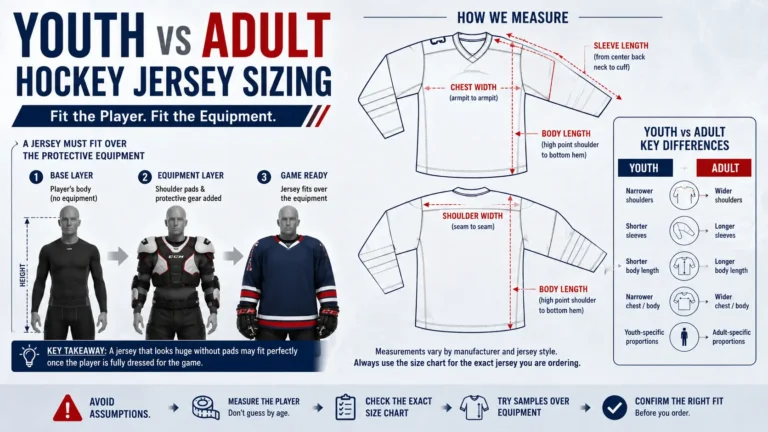
- Body length — When requested, measure from the top of the shoulder to the appropriate hem position.
For shorts, the supplier may require waist circumference, hip measurement, inseam, or a combination of these measurements. Follow the instructions on the supplier’s chart rather than substituting measurements from another manufacturer.
Body Measurements and Garment Measurements Are Not the Same
One detail that can cause considerable confusion is the difference between body measurements and finished-garment measurements. Some suppliers publish measurements for the player’s body. Others provide the dimensions of the actual jersey or shorts, and some provide both.
Those numbers should not be treated as interchangeable. If the chart lists body measurements, compare them with the player’s measurements. If it lists finished-garment dimensions, follow the manufacturer’s instructions for interpreting those numbers rather than assuming the garment should have the same circumference as the player’s body.
This distinction becomes particularly important when comparing suppliers. A measurement labeled “chest” on one chart may describe the player’s chest circumference, while another chart may be describing the width or circumference of the finished jersey.
If the chart is unclear, ask the supplier what the measurements represent before selecting sizes. This is a small question that is much easier to resolve before the uniforms enter production.
Consider How Each Player Will Actually Wear the Uniform
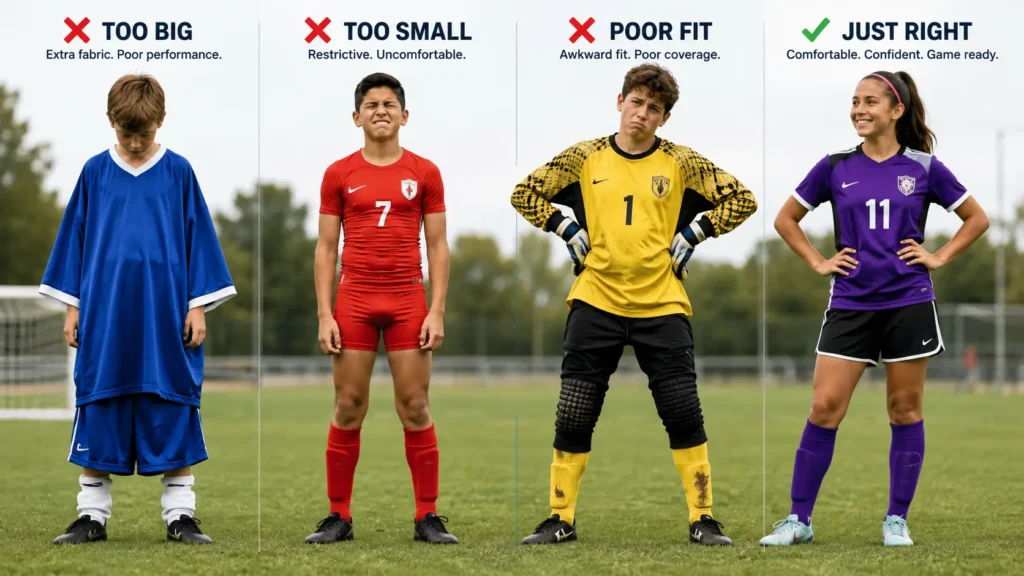
Correct measurements do not automatically guarantee the right fit. Some players prefer a closer athletic fit, while others are more comfortable with additional room. Weather, base layers, position-specific equipment, and the length of time the uniform will be used can all influence the final decision.
A player who regularly wears a long-sleeve base layer underneath the jersey needs enough room for that layer without making the uniform unnecessarily loose. The same principle applies to compression garments. Whenever practical, conduct the fitting under conditions that resemble how the player will actually wear the uniform.
Personal preference also matters, but it should be considered after the correct size range has been established. A player preferring a loose jersey does not necessarily mean jumping two sizes. Compare the available sizes and choose the one that provides the desired fit without creating unnecessary excess fabric.
Allow for Growth Without Ordering a Uniform That’s Too Large
Youth players can grow noticeably over the course of a season, particularly when uniforms are ordered months in advance or expected to last for more than one year. Growth should therefore be considered, but it should not become an excuse to order every player a jersey several sizes too large.
When a player falls close to the boundary between two sizes, compare both options if samples are available. Consider the manufacturer’s intended fit, the length of the season, expected layering, the player’s current comfort, and reasonable room for growth.
A slightly roomier jersey may be practical when a player is genuinely between sizes. An excessively oversized garment can create its own problems with comfort, appearance, and movement. The objective is enough room for realistic growth without sacrificing the fit the player needs now.
Goalkeepers Need Their Own Fit Check
Goalkeepers should not automatically be fitted the same way as outfield players. Protective padding, padded base layers, elbow protection, or goalkeeper-specific garments can change the amount of room needed underneath a jersey.
Whenever possible, have goalkeepers try on their jerseys while wearing the equipment they normally use during matches. If that is not practical, make sure the person handling the fitting understands what will be worn underneath the jersey before the final size is selected.
Record goalkeeper status in the master roster as well. That small notation helps prevent a goalkeeper’s special sizing requirements from disappearing when the final team order is assembled.
Check the Available Fit Options for Girls’ Teams
If you coach a girls’ team or mixed program, ask the supplier which garment cuts are actually available rather than assuming unisex sizing is the only option. Some manufacturers offer girls’ or women’s cuts with different proportions through the shoulders, waist, sleeves, and shorts.
A female-specific cut should not be treated as simply a smaller version of a unisex garment. The proportions may be different, which means moving one unisex size up or down may not produce the same fit. When multiple cuts are available, include them in the fitting process and let the player compare the appropriate options.
You can learn more about these differences in our guide to custom soccer uniforms for female athletes.
Create One Master Soccer Uniform Sizing Roster
Once fittings and measurements are complete, consolidate everything into one master roster. Scattered emails, handwritten notes, text messages, and separate parent spreadsheets increase the chance that a size will be missed, changed incorrectly, or entered twice.
For each player, record:
- Player name.
- Jersey size.
- Shorts size.
- Sock size.
- Player number.
- Goalkeeper designation, when applicable.
- Any special sizing or fit notes.
Treat this roster as the single source of truth for the order. If a size changes, update the master version rather than creating another copy elsewhere. This becomes increasingly important once jersey numbers, names, goalkeeper designations, and other customization details are attached to individual players.
Have Parents Verify the Recorded Information
Before submitting the uniform order, send the completed roster to parents for one final review. The purpose is to confirm what was already recorded, not to restart the sizing process.
For example, if a player tried on the sizing kit and was recorded as a Youth Large, send that recorded size to the parent for confirmation. Avoid asking, “What size does your child wear?” after the fitting. A parent may answer according to everyday clothing or another sportswear brand and unintentionally override the sizing work that has already been completed.
Ask parents to check the player’s name, jersey number, jersey size, shorts size, and any other personal information included in the order. Once those details are confirmed, lock the roster and use that version when submitting the final order.
Seven Soccer Uniform Sizing Mistakes to Avoid
- Guessing from age — Players of the same age can have very different body measurements.
- Using a generic size chart — Use the sizing information for the exact manufacturer and garment being ordered.
- Reusing last season’s sizes — Players grow, and different uniform lines may use different sizing standards.
- Ordering before everyone is fitted — Missing players often lead to rushed estimates immediately before the deadline.
- Keeping several sizing lists — Maintain one master roster instead of trying to reconcile emails, texts, handwritten notes, and separate spreadsheets.
- Ignoring special fit requirements — Goalkeeper equipment, base layers, available garment cuts, growth, and personal fit preferences can affect the final size.
- Skipping final verification — Give parents one opportunity to confirm the recorded information before the order enters production.
From Player Measurements to the Final Uniform Order
The most reliable sizing process begins with the exact uniform your team intends to buy. Get the supplier’s physical sizing kit whenever possible. If samples are unavailable, use the official size chart and measure every player according to the manufacturer’s instructions.
Then consider how the uniform will actually be worn, including base layers, goalkeeper equipment, available girls’ or women’s cuts, personal fit preferences, and realistic room for growth. Record every decision in one master roster and have parents verify the completed information before it is submitted.
Taking extra care during the sizing stage adds some work before the order is placed, but that is precisely when mistakes are easiest to correct. Once customized uniforms enter production, a simple sizing error can become a much more difficult and expensive problem.
Team Sizing Day Checklist
Use this checklist during your team fitting so every player’s uniform size is checked, recorded, and verified before the order is submitted.
All eight checks are complete. Keep the verified master sizing roster with your uniform order records and use that version when the final order is submitted.