How to Choose The Best Running Shoes
Buying running shoes sounds simple until you walk into a specialty running store or begin comparing models online. Suddenly, you are choosing between road shoes, trail shoes, daily trainers, racing shoes, different cushioning levels, unfamiliar heel-drop measurements, and dozens of brands claiming to offer the best technology.
The truth is that there is no single perfect running shoe for every runner. The right choice depends on where you run, how far you run, how your feet move, and which shoes feel comfortable from the moment you put them on.
This introductory guide explains the main types of running shoes, the features that matter most, and how to narrow your choices without getting distracted by advertising claims.
What This Guide Covers
Why Running Shoes Matter
Learn why footwear designed for running usually performs better than general athletic shoes.
Four Main Shoe Types
Compare road, trail, racing, and walking shoes before choosing a pair.
Your Running Style
Understand heel, midfoot, and forefoot striking without overcomplicating your decision.
Basic Fit Checks
Check toe room, heel security, width, socks, and when to try shoes on.
Cushioning Choices
See how maximum, moderate, and minimal cushioning create different running experiences.
Shoe Materials
Learn how uppers, midsoles, and outsoles affect comfort, weight, traction, and durability.
✔️ The Short Version
- There is no single best running shoe for everyone.
- Choose footwear designed for the surface where you run most often.
- Comfort and fit matter more than brand name, price, or appearance.
- Road, trail, racing, and walking shoes are designed for different purposes.
- Your shoes should feel comfortable without requiring a long break-in period.
- More cushioning is not automatically better for every runner.
What are the best running shoes?
There is no single best running shoe for everyone. The best pair fits your feet comfortably, matches your primary running surface, supports your training goals, and feels natural from the first few steps.
Why Choosing the Right Running Shoes Matters
Running places repeated stress on the body. Every stride creates impact that travels through the feet, ankles, knees, hips, and lower back. A properly fitted running shoe helps distribute those forces more comfortably while providing traction and support for the surface where you run most often.
Shoes alone cannot prevent every running injury. However, footwear that fits correctly and matches your activity can make training more comfortable. It may also reduce common problems such as blisters, hot spots, foot fatigue, and irritation caused by shoes that are too tight, too loose, or poorly suited to the terrain.
It is not about choosing the best running shoes overall. It is about choosing the best running shoes for your needs.
A lightweight racing shoe may be an excellent choice for a competitive runner but a poor everyday option for someone who needs a durable training shoe. A rugged trail shoe may perform well on dirt paths but feel heavy and awkward on pavement.
The goal is not to buy the most impressive shoe. The goal is to choose footwear that matches how and where you actually run.
The Four Main Types of Running Shoes
Not every running shoe is designed for the same purpose. Manufacturers build different models for different surfaces, distances, speeds, and training goals.
1. Road Running Shoes
Road running shoes are designed for paved roads, sidewalks, running tracks, treadmills, and other relatively smooth surfaces. They usually feature lightweight construction, flexible soles, and cushioning intended to handle repeated impact on hard ground.
These shoes are generally the best starting point for runners who do most of their training on pavement or indoor tracks.
2. Trail Running Shoes
Trail running shoes are built for dirt paths, gravel routes, wooded trails, and uneven terrain. Compared with road shoes, they usually have deeper tread patterns, stronger toe protection, and more durable upper materials.
The additional grip can improve confidence on loose dirt, wet ground, rocks, roots, and other surfaces where a smooth road outsole may not provide enough traction.
3. Racing Shoes
Racing shoes prioritize speed and efficiency. They are often lighter than traditional daily trainers and may use highly responsive cushioning, stiffening plates, or other design features intended for faster running.
Because some racing shoes sacrifice durability, stability, or everyday comfort, many runners reserve them for races, tempo sessions, and speed workouts rather than using them for every run.
4. Walking Shoes
Walking shoes may resemble running shoes, but they are designed around a different movement pattern. Running produces greater impact and typically requires different cushioning, flexibility, and transition characteristics.
Walking shoes may be suitable for dedicated walkers, but regular runners will usually benefit from footwear designed specifically for running.
Understanding Your Running Style
No two runners move exactly the same way. Running form varies according to experience, body mechanics, speed, fatigue, terrain, and training habits.
You do not need to conduct a complicated biomechanical analysis before buying shoes. However, understanding where your foot tends to contact the ground can help you recognize why some cushioning layouts may feel more comfortable than others.
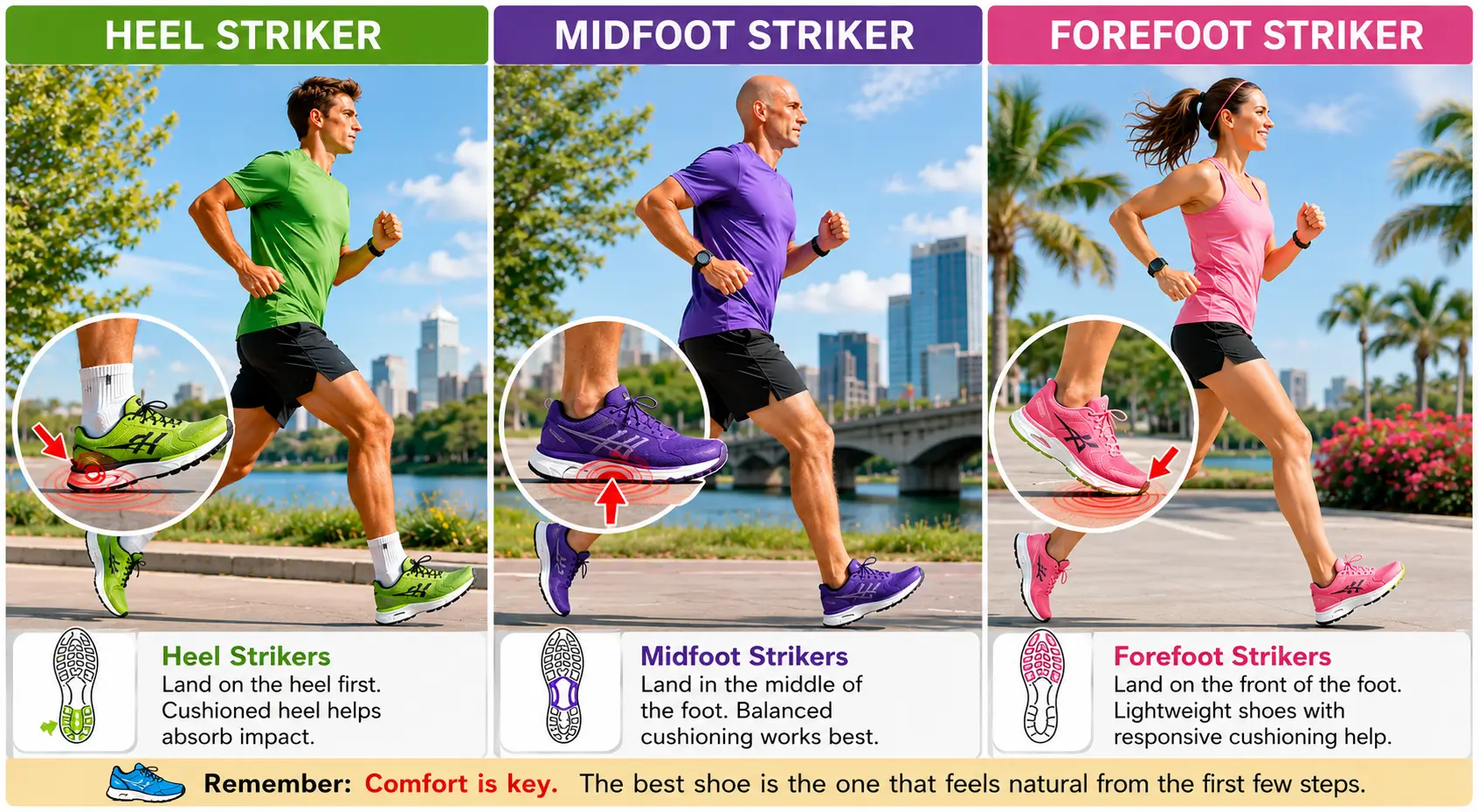
Heel Strikers
Many recreational runners contact the ground with the heel first. These runners may prefer shoes with comfortable heel cushioning and a smooth transition toward the forefoot.
Midfoot Strikers
Midfoot strikers land closer to the centre of the foot. They may prefer balanced cushioning throughout the sole rather than a shoe that concentrates most of its softness in the heel.
Forefoot Strikers
Forefoot strikers land closer to the front of the foot. Lightweight designs and responsive forefoot cushioning may feel natural to some runners with this pattern.
Foot strike is only one part of the decision. Comfort remains more important than trying to force yourself into a shoe category based on a single movement characteristic.
A running shoe should feel natural during walking, jogging, and a few faster steps. It should not require a long or uncomfortable break-in period.
Five Basic Fit Checks Before Buying Running Shoes
Even a highly rated running shoe will perform poorly if it does not fit correctly. Before comparing advanced technology, complete these five basic checks.
1. Leave Room in the Toe Box
Your toes should have enough room to move naturally without pressing against the front of the shoe. Many runners look for approximately a thumb’s width of space beyond the longest toe, although the correct amount depends on the shape of the shoe and your foot.
2. Check Heel Security
Your heel should remain secure without painful pressure. Excessive heel lifting can contribute to rubbing and blisters, while an overly tight heel counter may create irritation.
3. Pay Attention to Width
Foot width varies considerably. Many running-shoe manufacturers offer narrow, standard, wide, and extra-wide sizes. Choosing the correct width can make a larger difference than switching brands.
4. Try Shoes Later in the Day
Feet often expand during the day and while exercising. Trying shoes on later in the afternoon may provide a more realistic indication of how they will feel during a run.
5. Wear Your Running Socks
Try shoes on with the same style and thickness of socks you normally wear while running. Socks affect the amount of available space inside the shoe and can change how securely the heel and forefoot fit.
The complete Running Shoe Buying Guide covers sizing, width, neutral and stability shoes, replacement signs, and other purchase considerations in more detail.
How Much Cushioning Do You Need?
Modern running shoes are available with a wide range of cushioning levels. Some models provide a soft, highly cushioned ride, while others keep the foot closer to the ground for a firmer and more responsive feel.
Maximum Cushioning
Maximum-cushioned shoes may appeal to runners who prefer a softer ride, spend long periods on hard surfaces, or regularly cover longer distances.
Moderate Cushioning
Moderately cushioned shoes often provide a practical balance between comfort, weight, stability, and responsiveness. This makes them a common choice for everyday training.
Minimal Cushioning
Minimal shoes provide more ground feedback and less material beneath the foot. Some experienced runners enjoy this style, but switching abruptly from highly cushioned footwear may require an adjustment period.
The best cushioning level is the one that feels comfortable during your normal runs. More cushioning is not automatically better, and less cushioning is not automatically more natural.
The Three Main Parts of a Modern Running Shoe
Running-shoe materials influence breathability, weight, cushioning, traction, flexibility, and durability. Although brands use different names for their technologies, most shoes contain three basic sections.
1. The Upper
The upper wraps around the foot and helps hold it securely in place. Most modern running shoes use engineered mesh or lightweight woven materials that allow heat and moisture to escape while still providing structure.
2. The Midsole
The midsole sits between the foot and the outsole. It contains the primary cushioning material and has a major influence on how soft, firm, stable, or responsive the shoe feels.
Manufacturers use different foam compounds, shapes, densities, and support structures to create different running experiences.
3. The Outsole
The outsole is the bottom layer that contacts the ground. It provides traction and protects the softer midsole material from wear.
Road shoes usually have smoother rubber patterns, while trail shoes use deeper lugs to improve grip on loose and uneven terrain.
What to Remember Before Choosing a Pair
The best running shoe is not necessarily the newest, lightest, softest, or most expensive model. It is the shoe that fits your foot, matches your running surface, and feels comfortable during the type of training you actually do.
Begin with the basic category you need. Choose road shoes for pavement, trail shoes for uneven terrain, and racing shoes only when their specialized design matches your goals. Then compare fit, width, cushioning, and overall comfort.
Once you understand those fundamentals, you can make more detailed decisions about stability, heel drop, replacement timing, durability, and advanced shoe technology.